
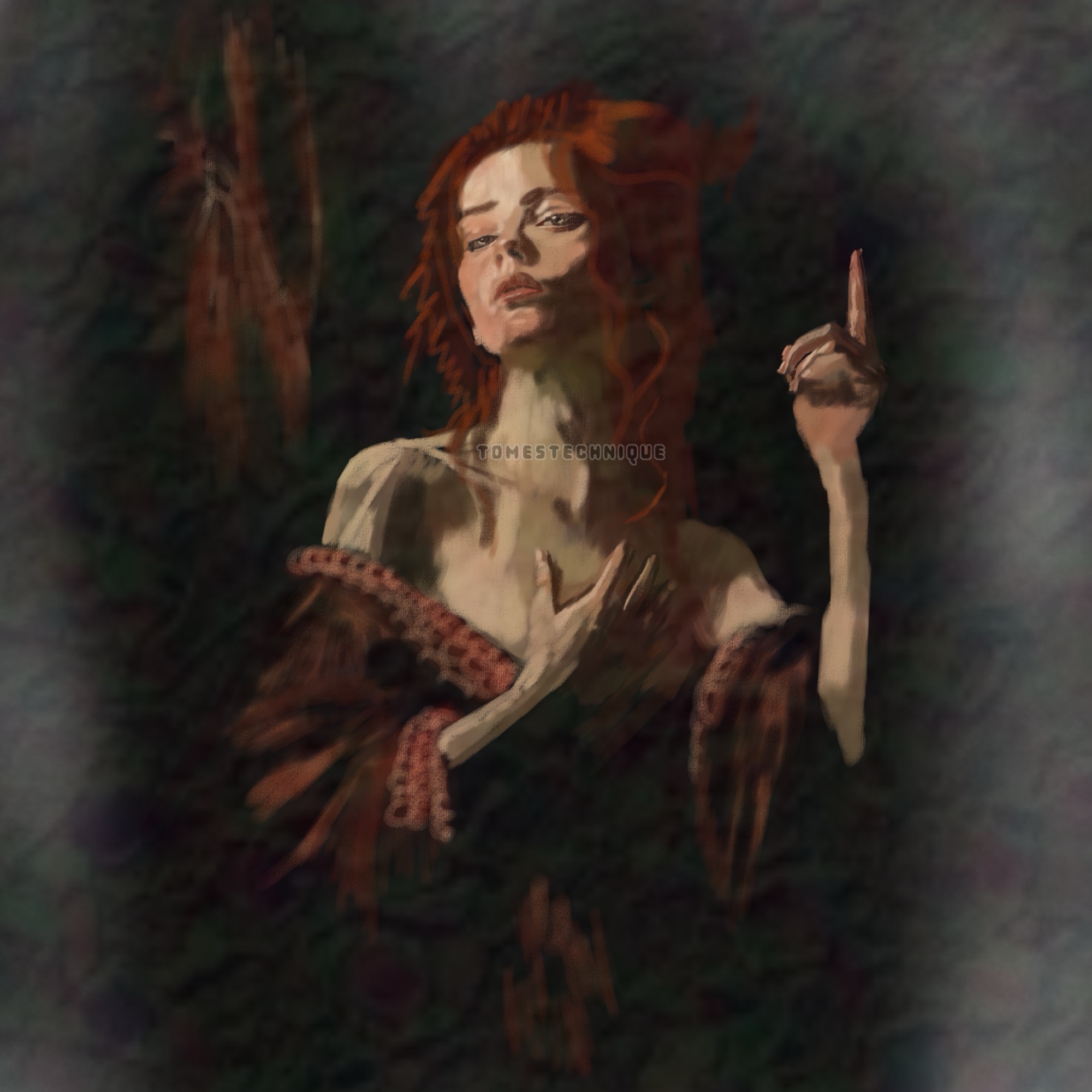
It’s time to appreciate the masters again. As if there’s ever a time not to. Today, I am caught between the stark drama of Caravaggio’s shadows and the anatomical grace of da Vinci. My stylus trembles against the glass, searching for that elusive sfumato where bone yields to breath, where structure softens into spirit, and shadow forgets where it ends and light begins.
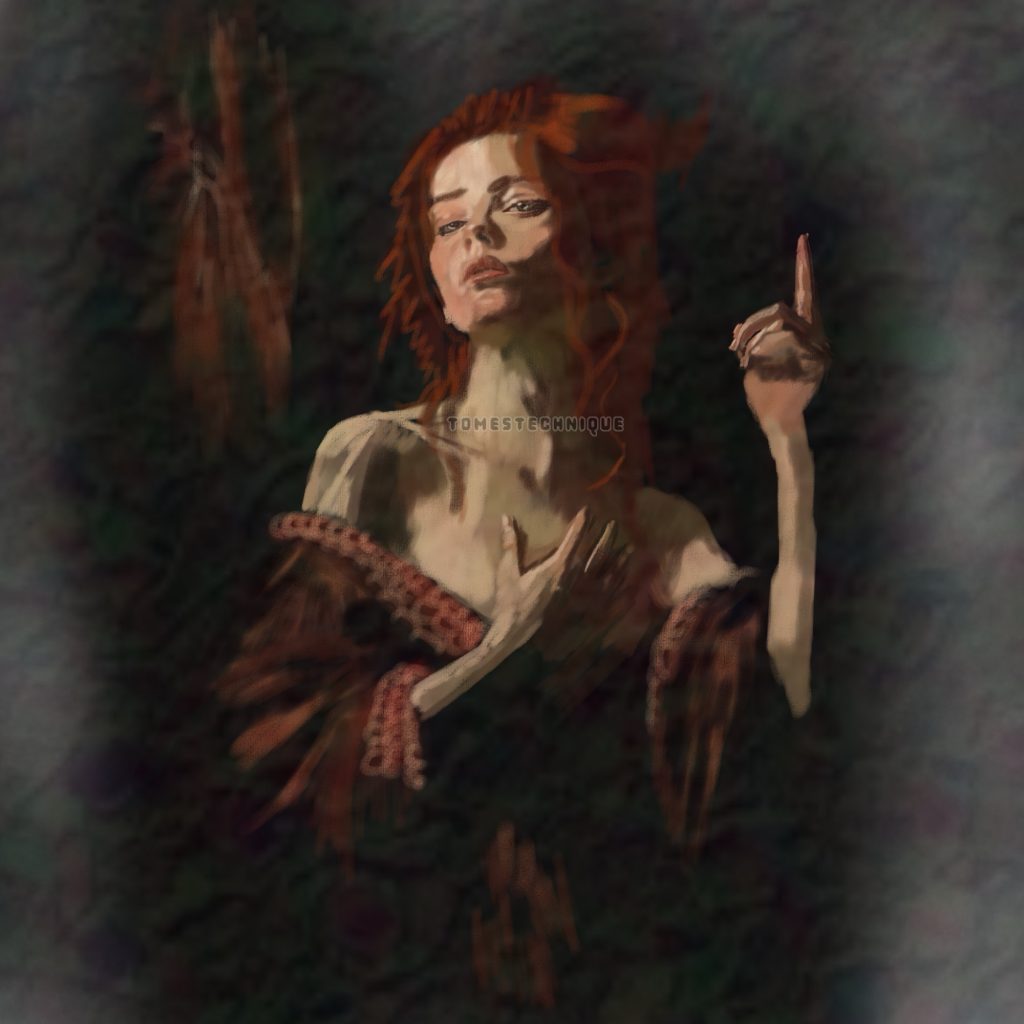
I’m toying with light and darkness. I love the way some paintings feel lit from within. Chiaroscuro demands honesty. It forces us to confront the hidden corners of the canvas, and the soul, revealing truths that can survive nowhere else: small lanterns sheltered inside the deepest, most velvet black.
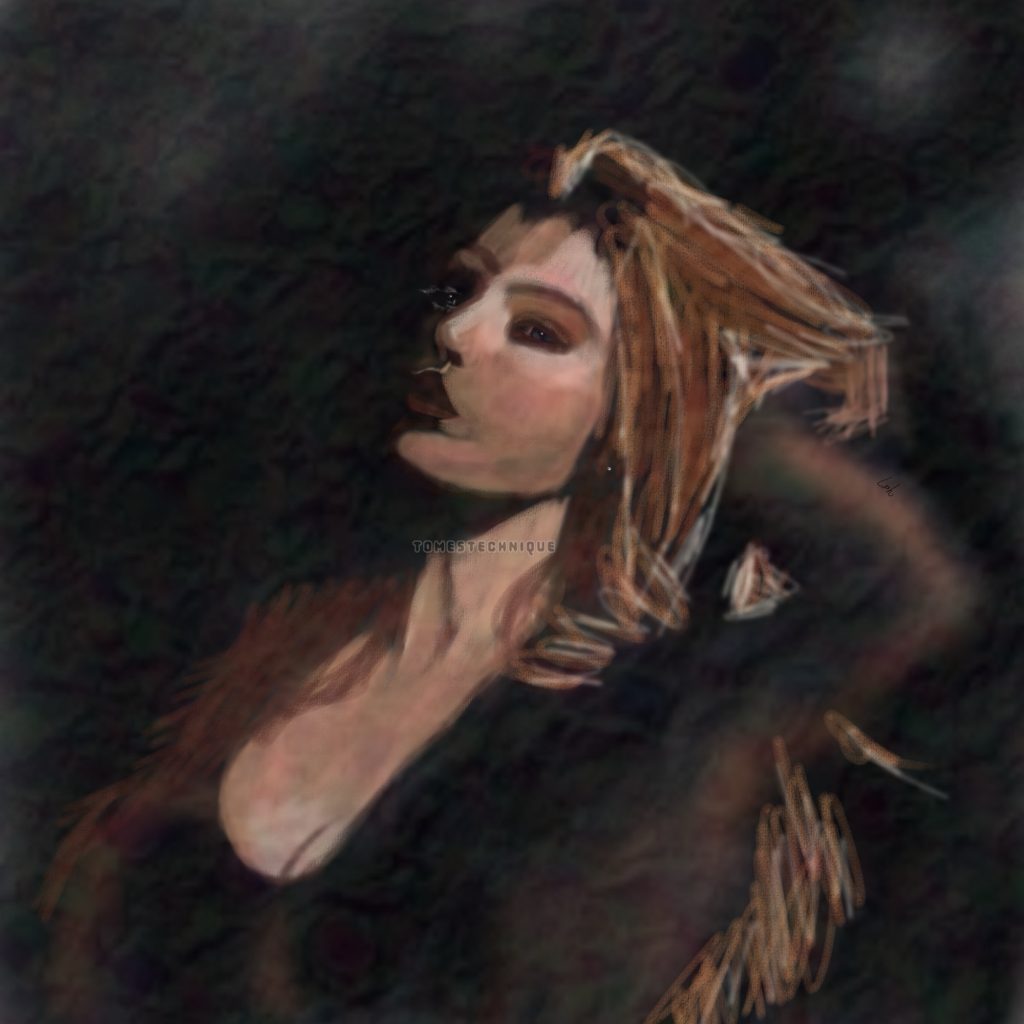
Sepia isn’t going to be unloved in this. Here, the light is a ghost- the warm, honeyed glow of a memory I can no longer touch. It clings to the edges of my vision like dust motes in an attic window, a beautiful ache for a moment that has irrevocably slipped into the past. If Caravaggio is the crisis, sepia is the aftermath. Not the wound itself, but the tenderness that remains after the pain has learned to whisper.
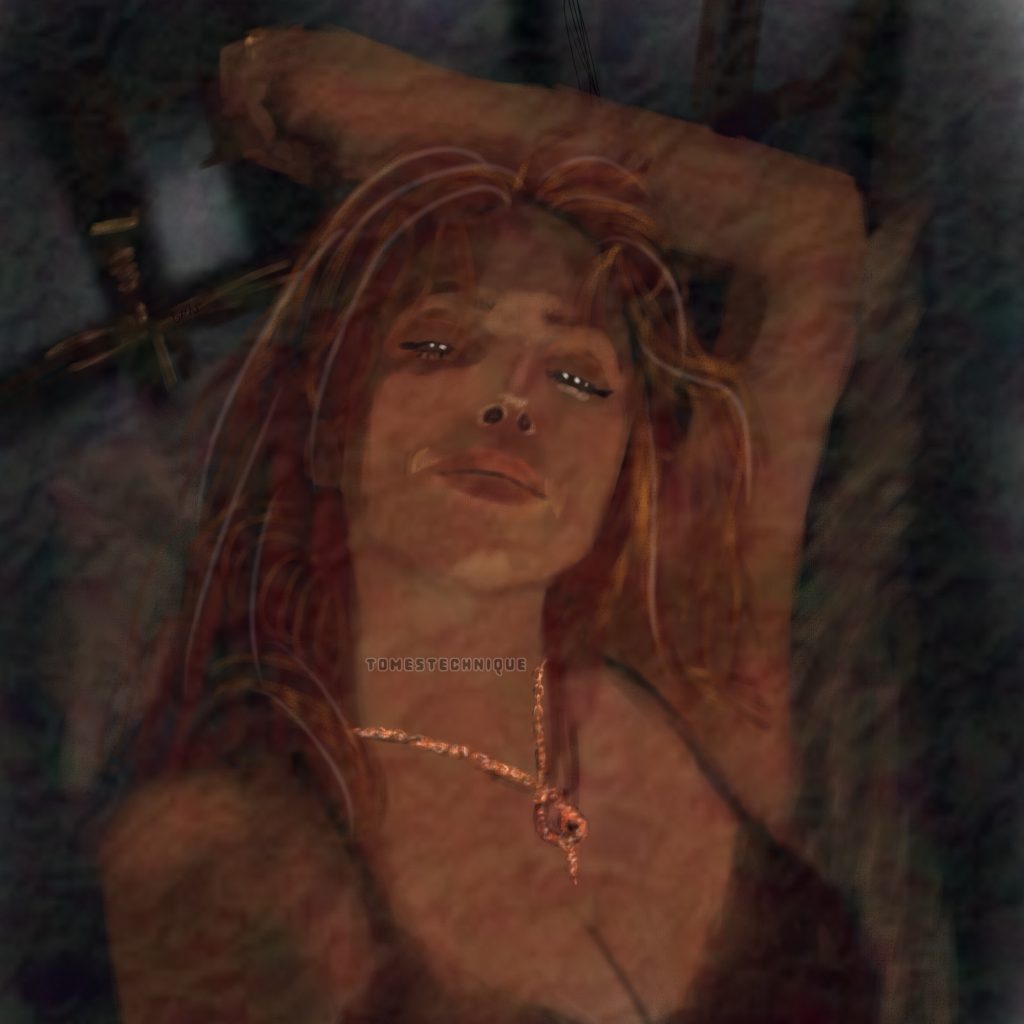
Mortality has a way of sharpening one’s attention. My latest medical reports became an unlikely teacher. I’m reminded to find the beauty in the little things. In that sterile landscape of black-and-white data, I discovered a strange, quiet grace. A moment where the clinical chaos hushes, and the small, overlooked details bloom into something profound. I gathered those discarded remnants—the broken edges of what was deemed useless or failing—and held them to the light. In the shaping, I found a strange alchemy: the refuse yields not to decay, but to an unexpected, wild resurgence. The diagnosis is not the destination; it is merely another horizon, another seam where shadow negotiates with light.
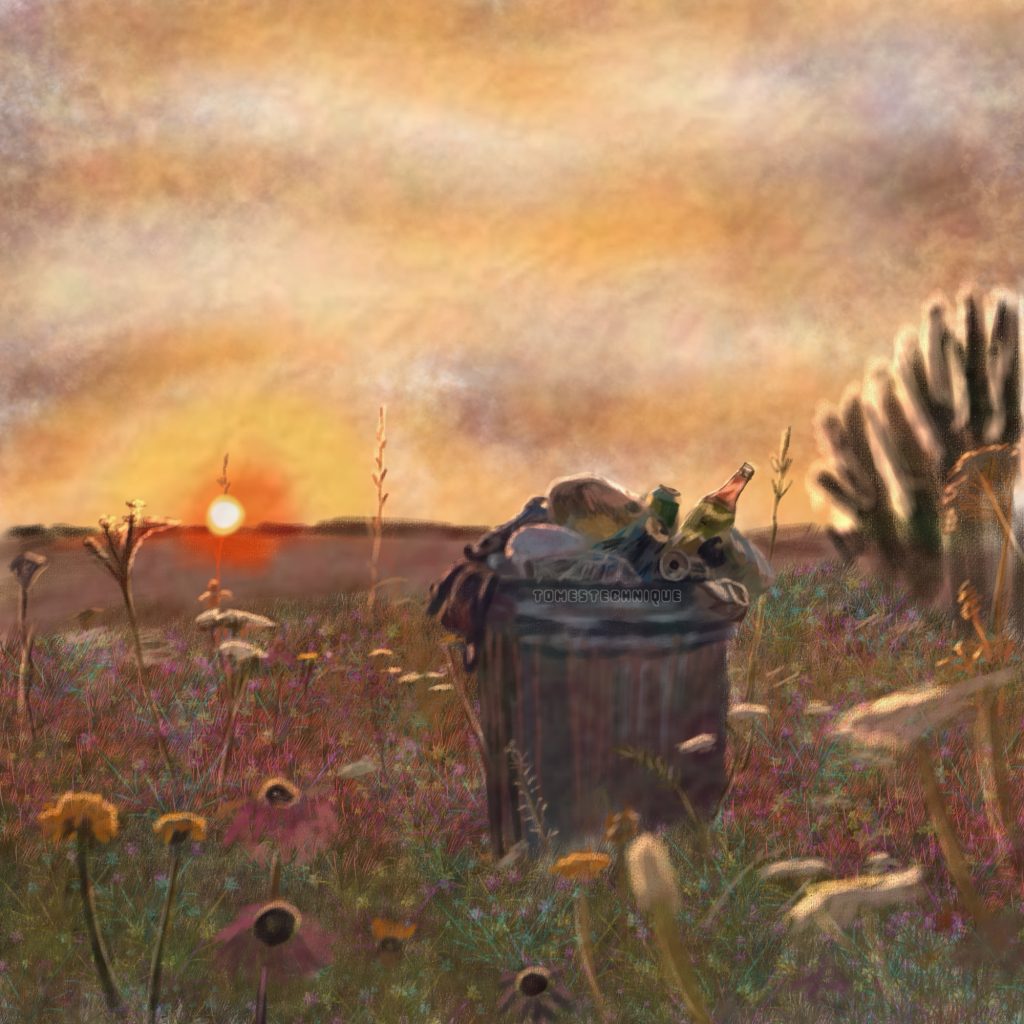
I’ve completed this doodle before, though in another season of myself. I didn’t even recall the old lines until I’d already completed this version—as if my hand remembered the path before my mind did.
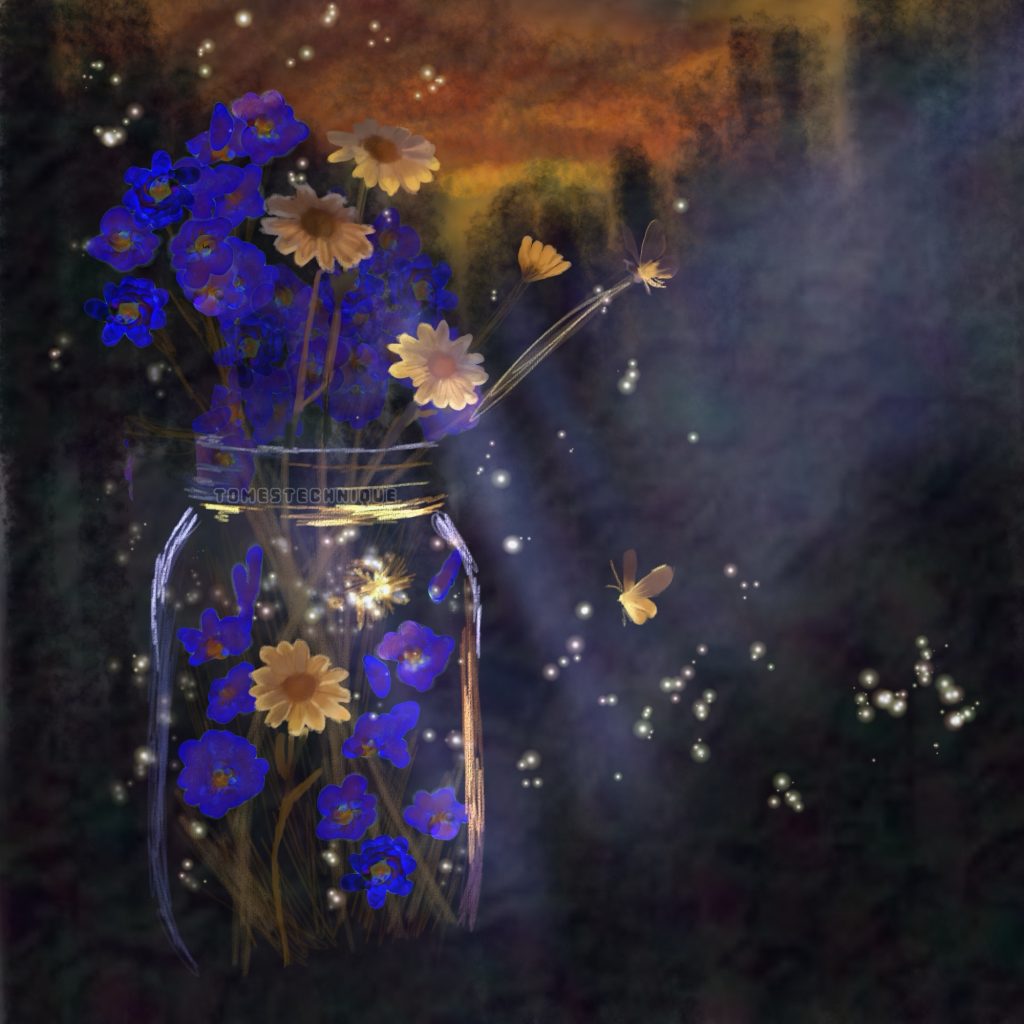
I have rendered a winter version of this scene before, cold and exposed. Then, it was merely an exercise in reclamation; now I understand it differently. The briars are not obstacles. They are architects. This time, they weave shelter from ruin, proving that even the sharpest fragments can become the framework of sanctuary. Tonight, as the day surrenders to dusk, the world dissolves into the realm of the hidden. Below the canopy, the fairy forest awakens. Its glow is the only witness to the magic whispered by the fading light, a summer restoration of what winter froze in place. It thrives, not despite the coming darkness but because of it. Its violet glow gathers in the spaces daylight cannot enter, reclaiming what frost merely borrowed.
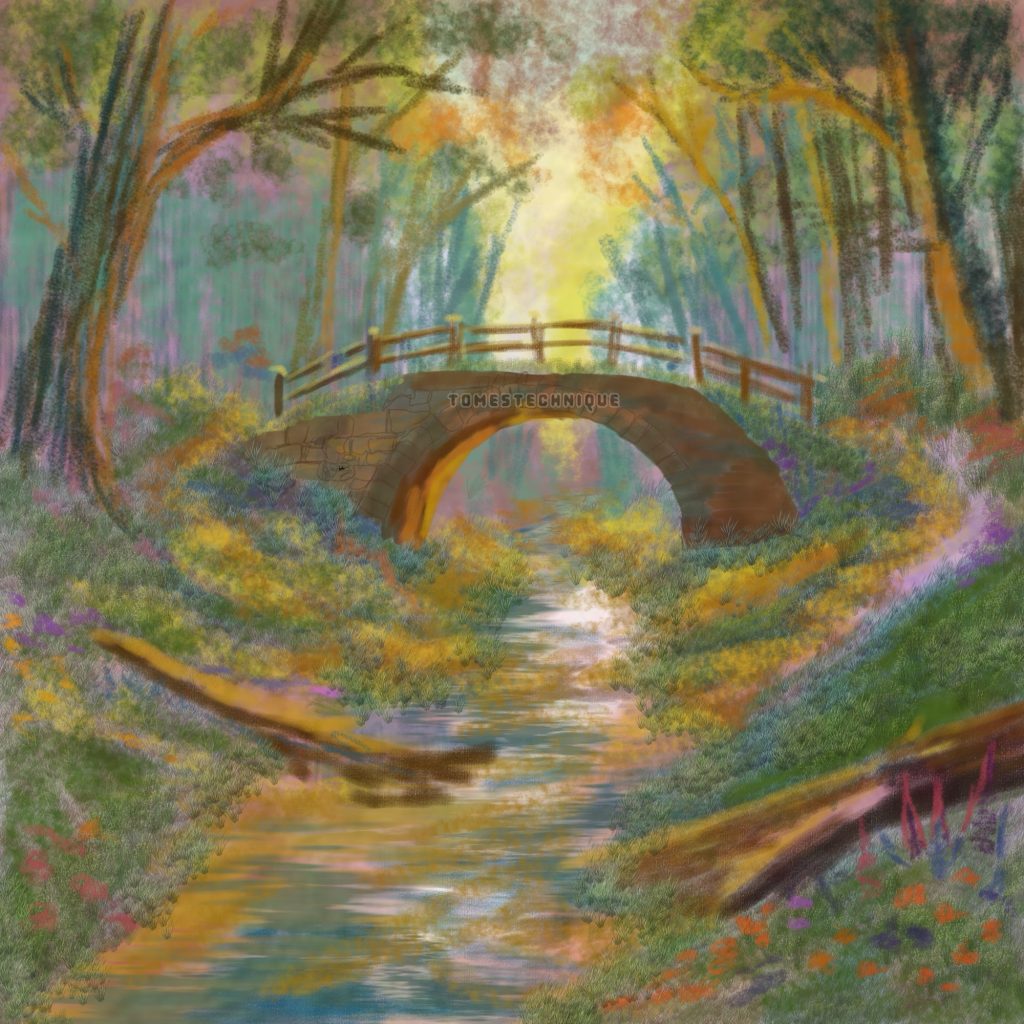
The crossing demands everything. It is a passage through untamed green—a baptism by nature, where every step is a commitment to leaving the known behind and embracing the wild promise of the unknown. Armed only with a trembling stylus and a soul schooled in shadows, I step into the thicket. Whatever waits beyond is unknowable. The crossing asks not for certainty, only for willingness.