Tag: Artistic Process

  • Craft

    Craft

    I’ve been inspired by my aunt to write lyrics about my grandmother. Heavy with the discipline, heavier with love. She’d stay up all nite making sure all the girls had Easter dresses to wear. Every grandchild had a blanket made for them. The hum of the singer, the thread in the evening. At the time it felt as ordinary as breathing. Years later I would spend hours on a single drawing and finally understand what she’d been giving away. I lost mine as a teen and regret it fully. The carelessness of youth juxtaposed with the meticulous care of old age. While my grandmother was spending weeks measuring, cutting, and stitching my specific warmth, I might have been distracted, outgrowing things, and moving away. The regret isn’t just about losing the object; it’s about the realization that I can’t thank the hands that made it anymore.
    She had a heart full of Jesus and a hand made of steel,
    Taught us how to bow our heads before every meal,
    She’d make you pick a switch out in the yard,
    Simple lessons that hit us real hard.
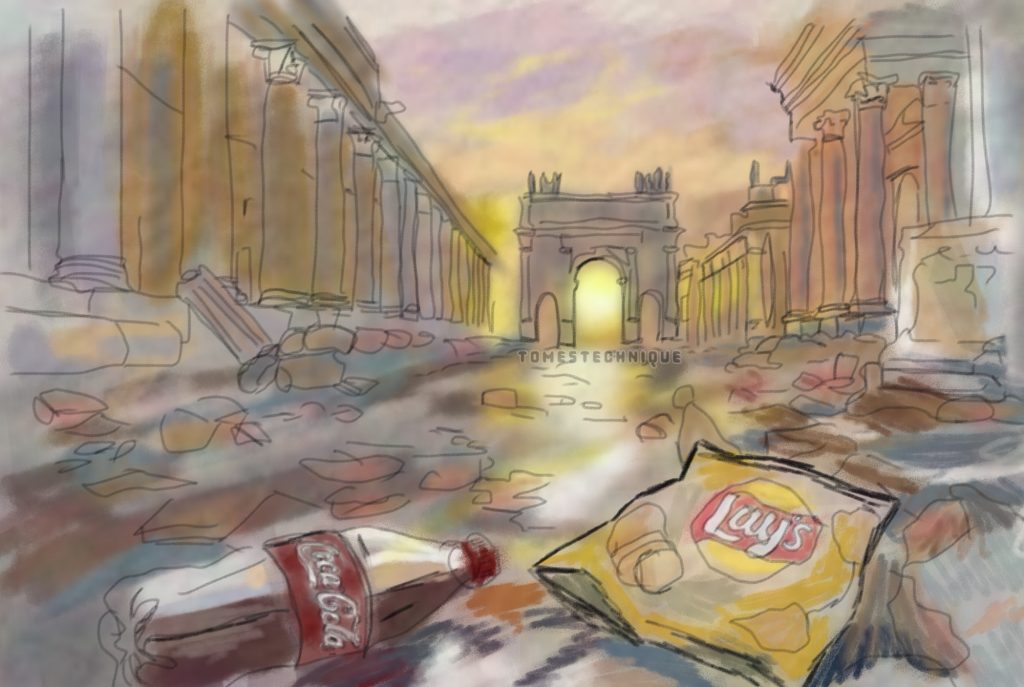
    Walking down the steps staring at your shoes,
    Hoping for a branch you wouldn’t have to use,
    She never spared the rod and never spared love,
    Rooted in the faith she carried from above. 
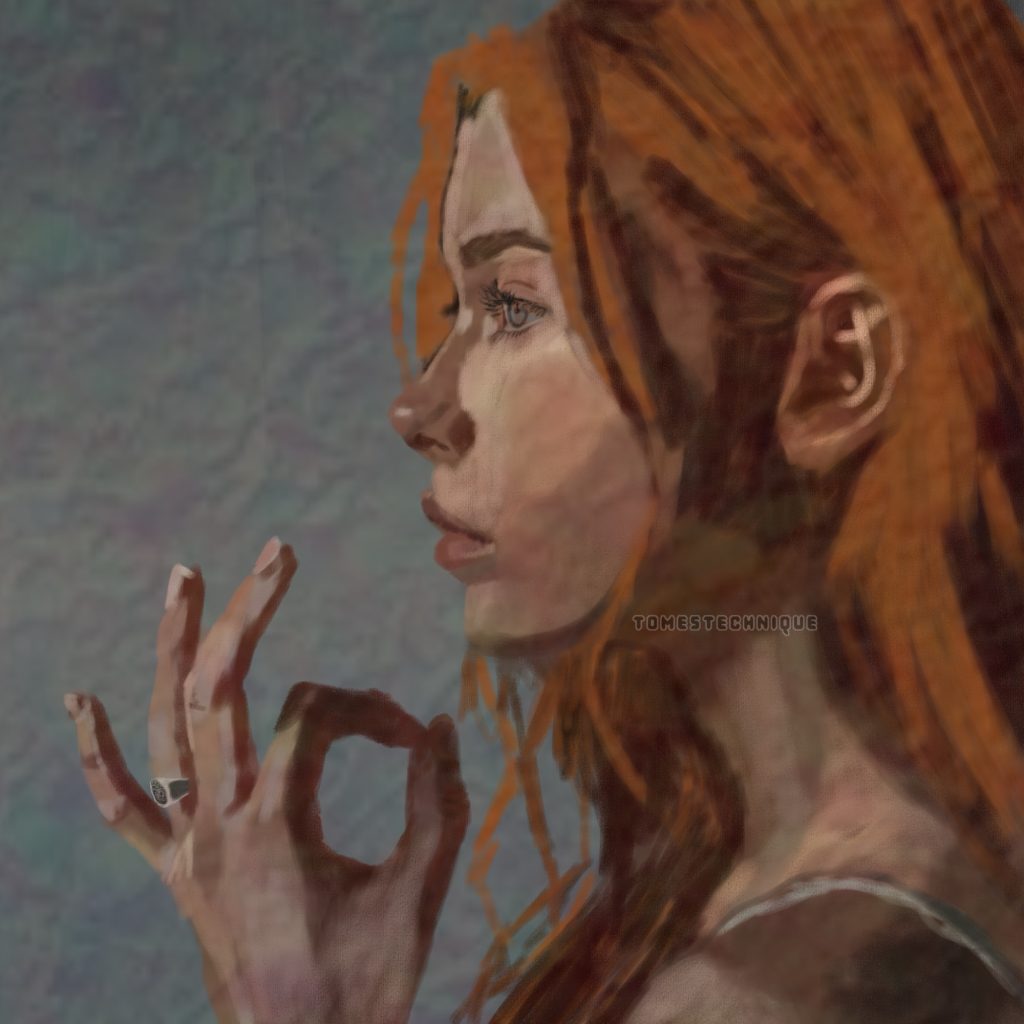
    A casual prompt for a pastry doodle turned into fan art. A request for a croissant makes me feel like making it extra special. Feels like Loid needs to be there. Loid in the kitchen, a coat on the chair. The smell of baking, peace in the air. My inbox is filling with requests for the sweet, where fictional worlds and real worlds meet. Nobody asked for Loid, but he knows when he’s needed. Nobody asked for the extra details. My grandmother wasn’t asked to make Easter dresses extraordinary. She made them extraordinary anyway. Generosity often arrives as unnecessary detail.
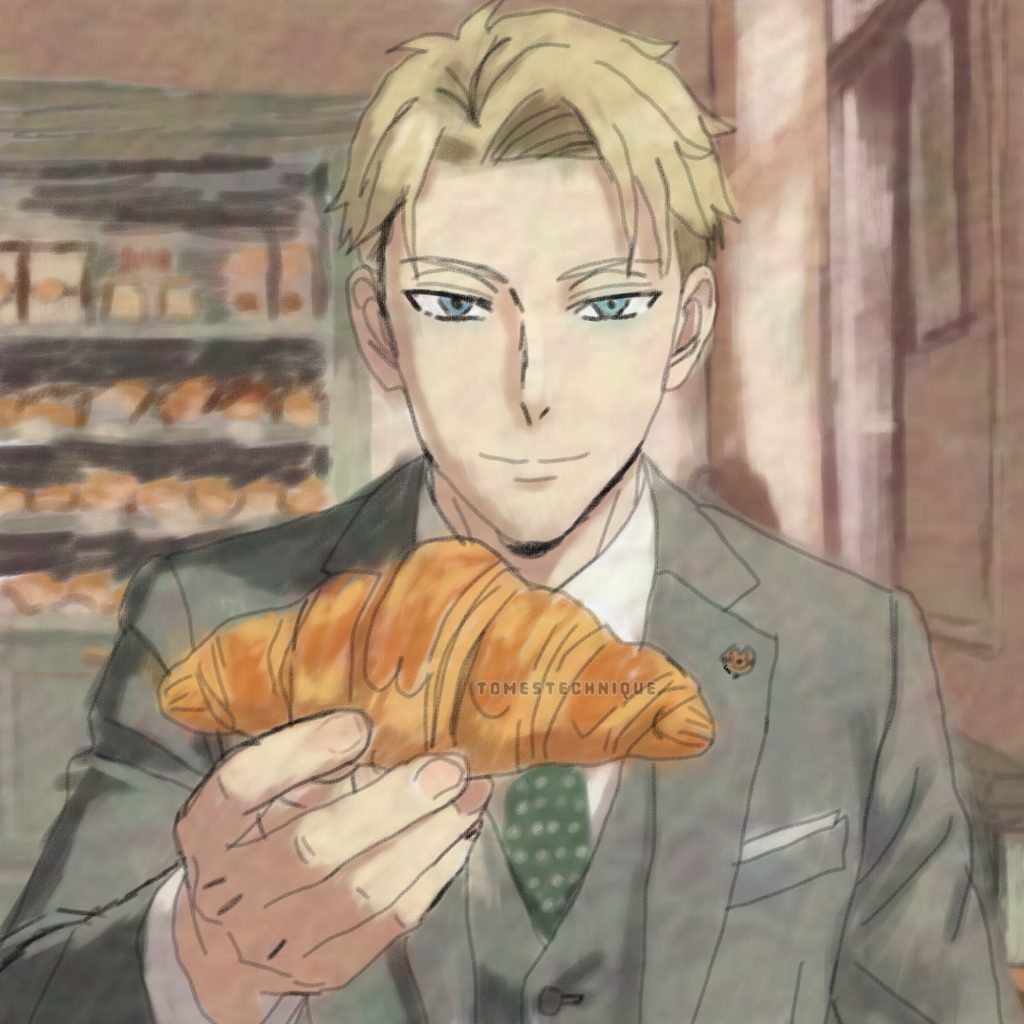
    More requests for yuri and also fur-babies come in. They’re asking for Yuri, they’re asking for fluff, but it’s the four-legged muses that anchor. The click of the stylus, my thread in the evening. Some people ask for characters they love. Others ask for companions they’ve loved. Another blanket sent out into the world. Every time I finish a commission for someone else—giving them an object that will outlast a loved one—I am paying back the debt of the blanket I lost. I am making sure someone else’s blanket doesn’t vanish.
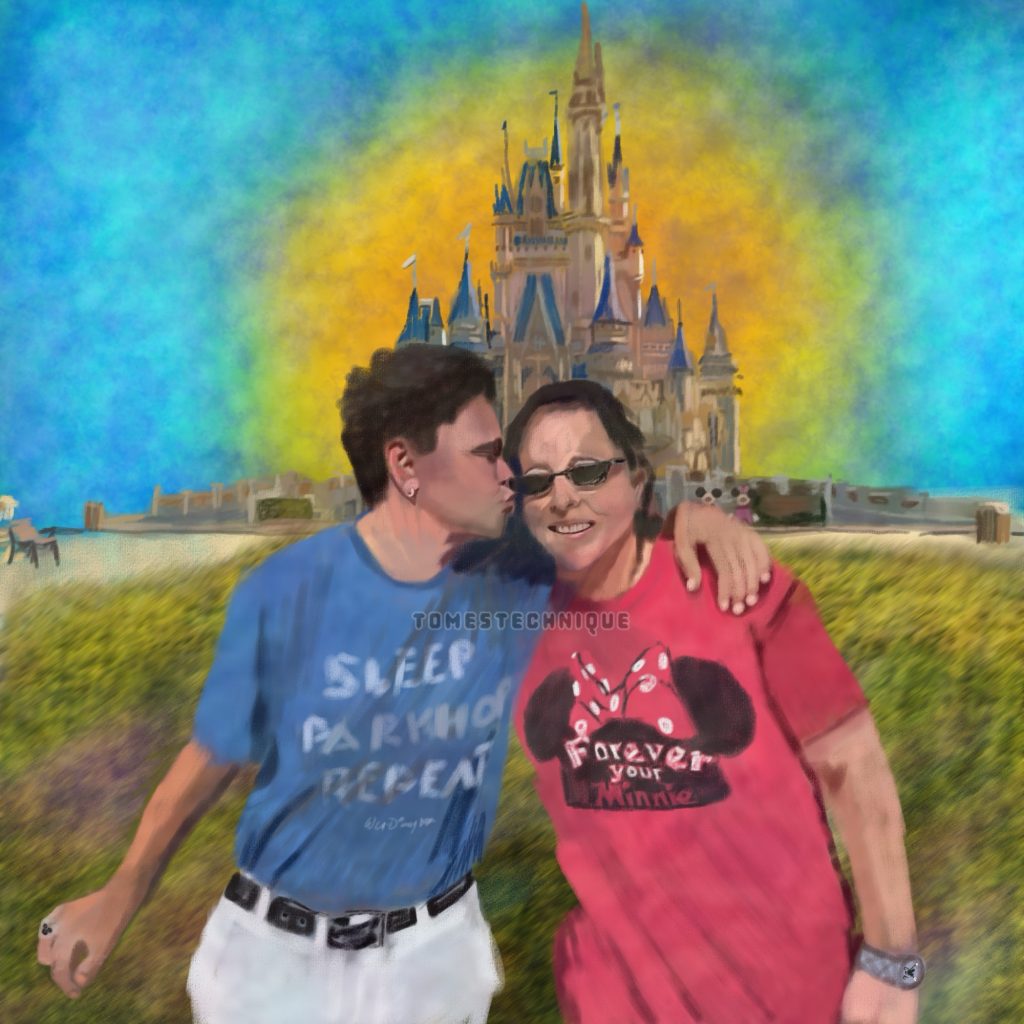
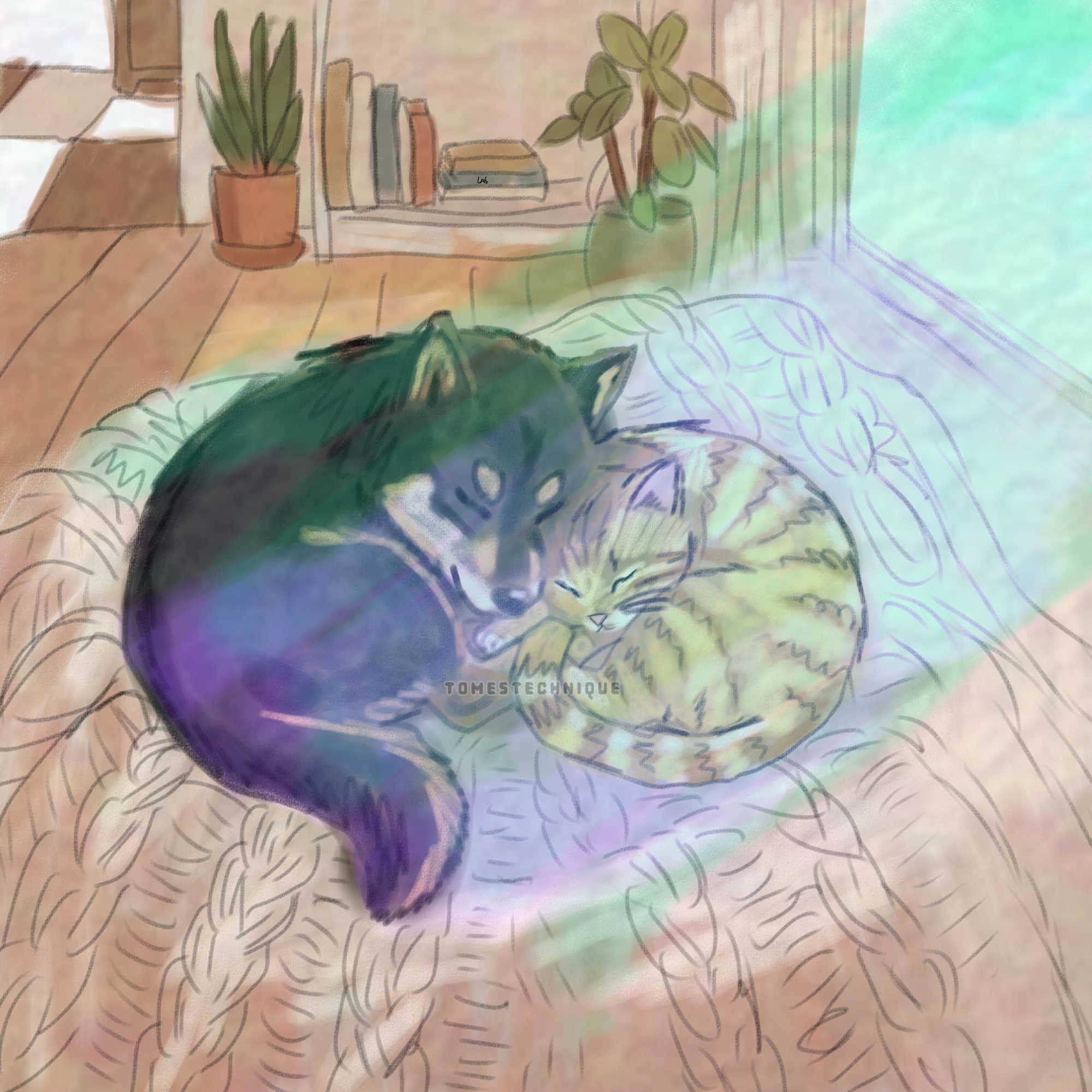
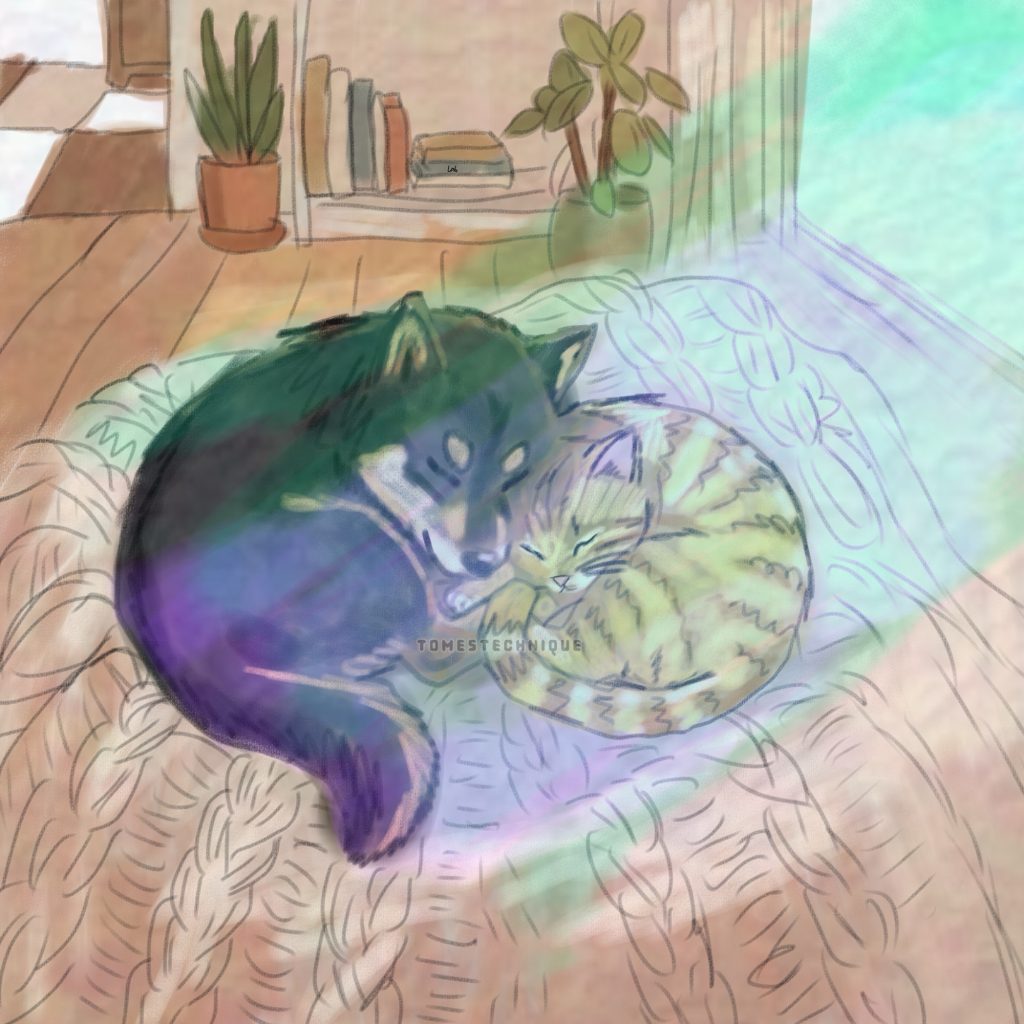
    Who says no to puppers? Not me! It is special, like doing a piece on my own family. The wag of a tail, a sketch of a companion that never will fail. Ink on the screen, a portrait of family, home by design. Fictional characters arrive with reference sheets. Dogs arrive with stories. Cats arrive with legends.
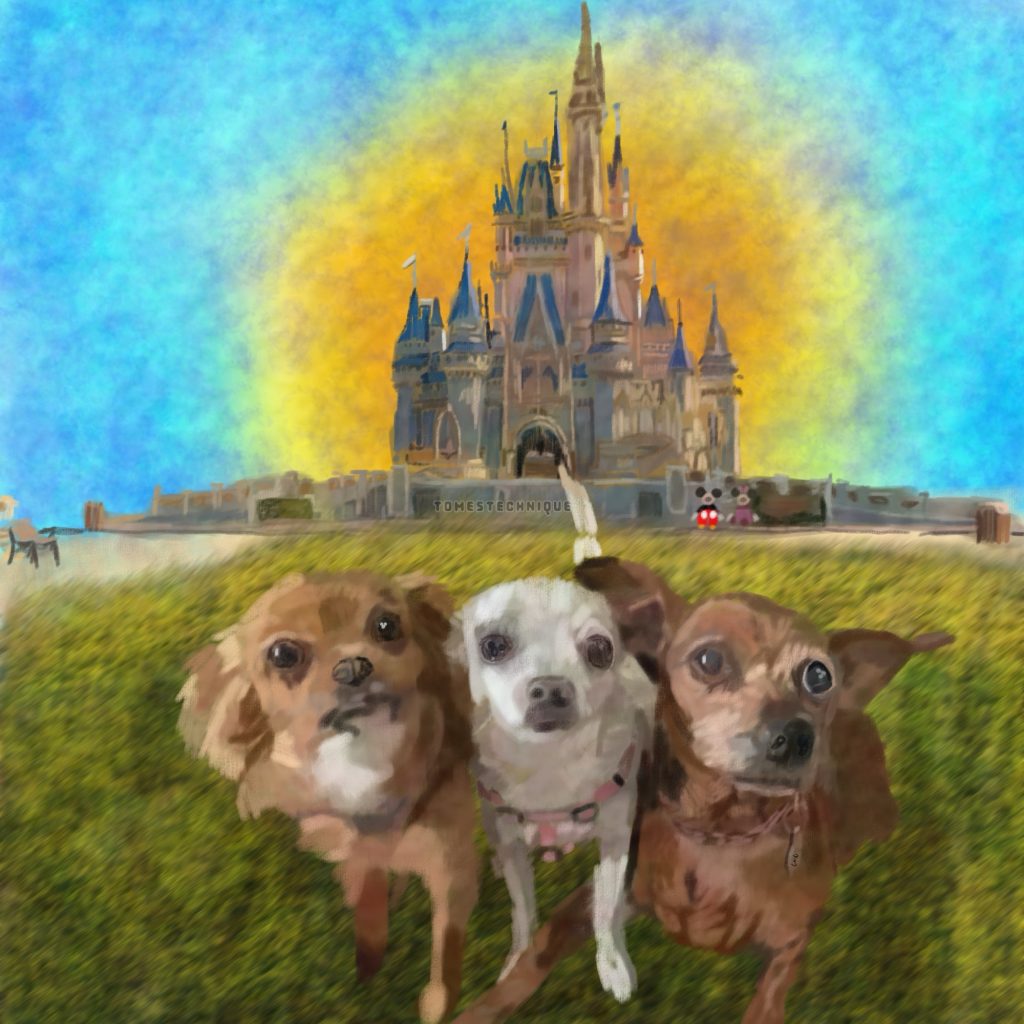
    The needle dances over the fabric, mimicking the rhythm of a shared silence. Each precise seam is a tiny, repeated breath held for someone miles away. Someone creating something tangible that says, “I thought about you when you weren’t there.” The portrait is finished, but a portrait doesn’t keep anyone from leaving. Neither does a blanket, but both are proof that somebody cared enough to make something last. The hum has faded. The thread continues.
  • Anatomy

    Anatomy

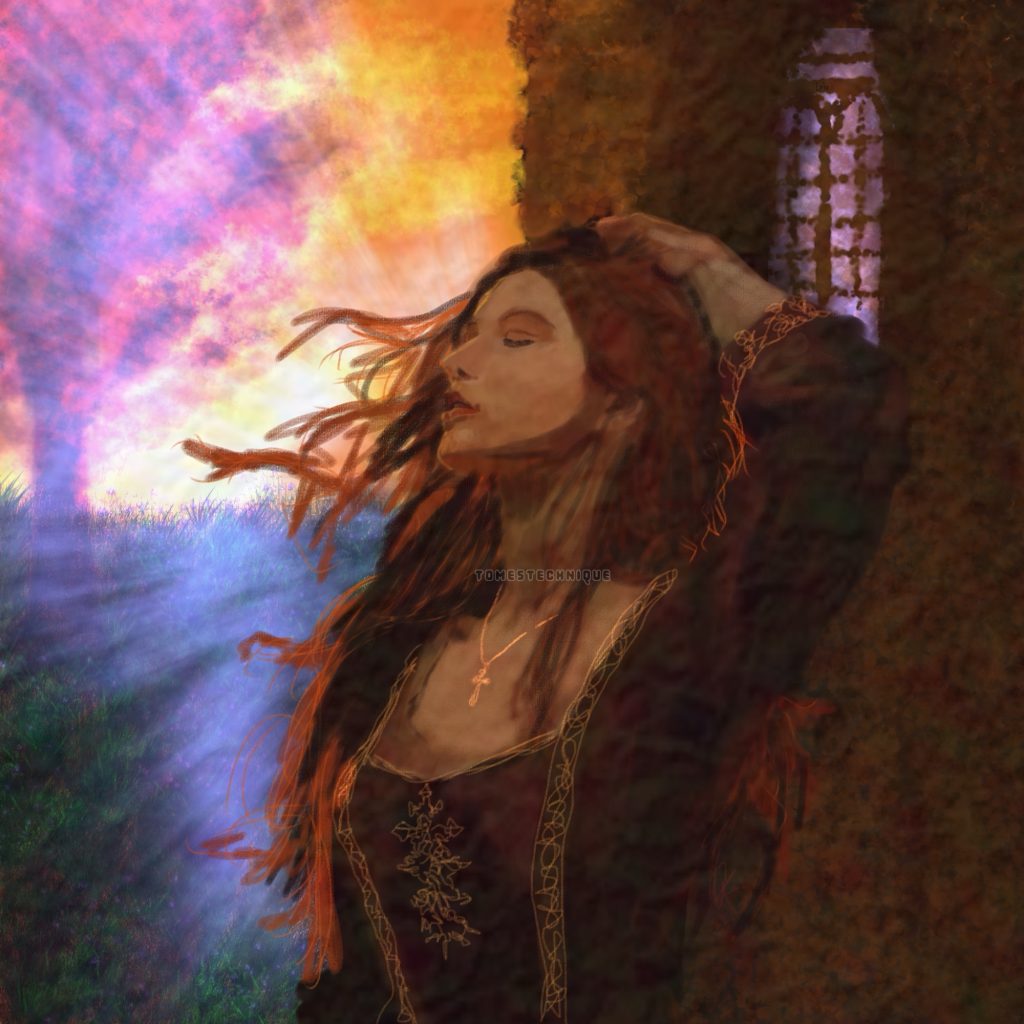
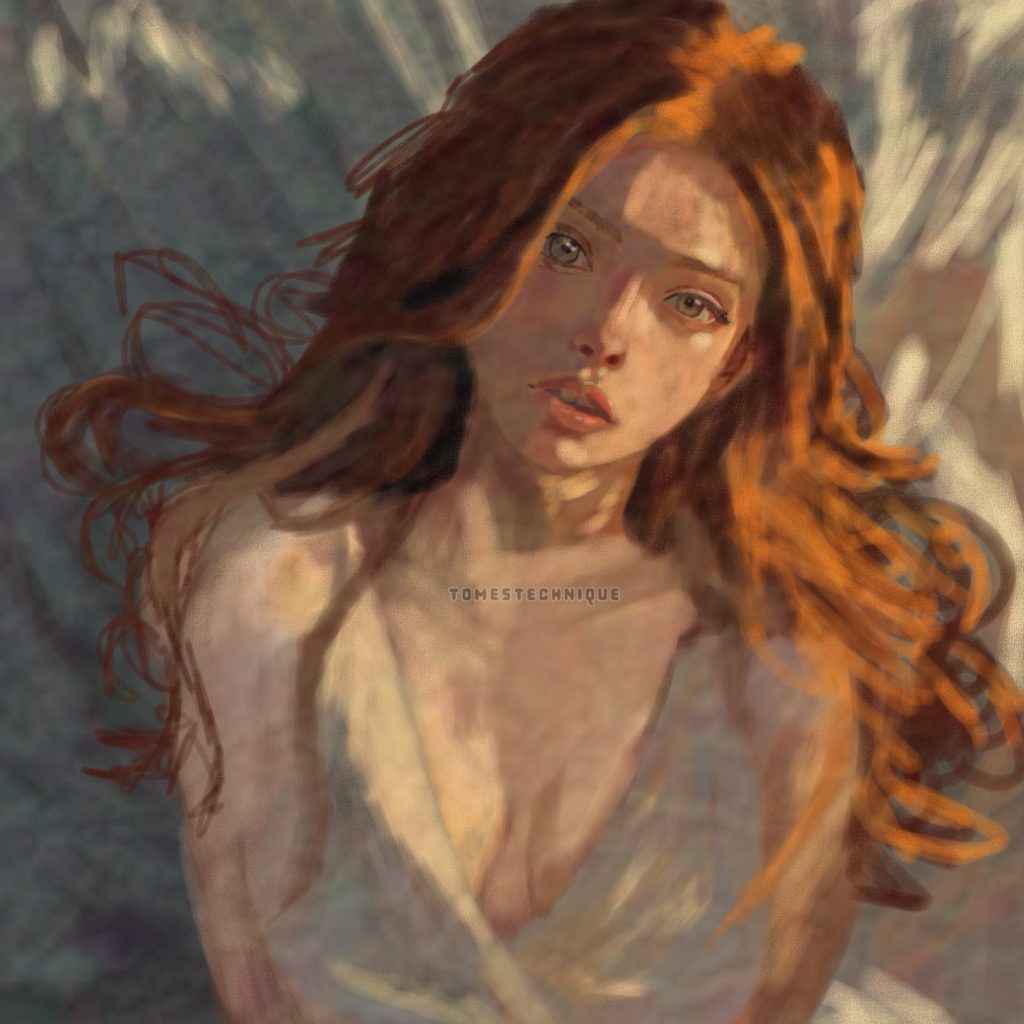
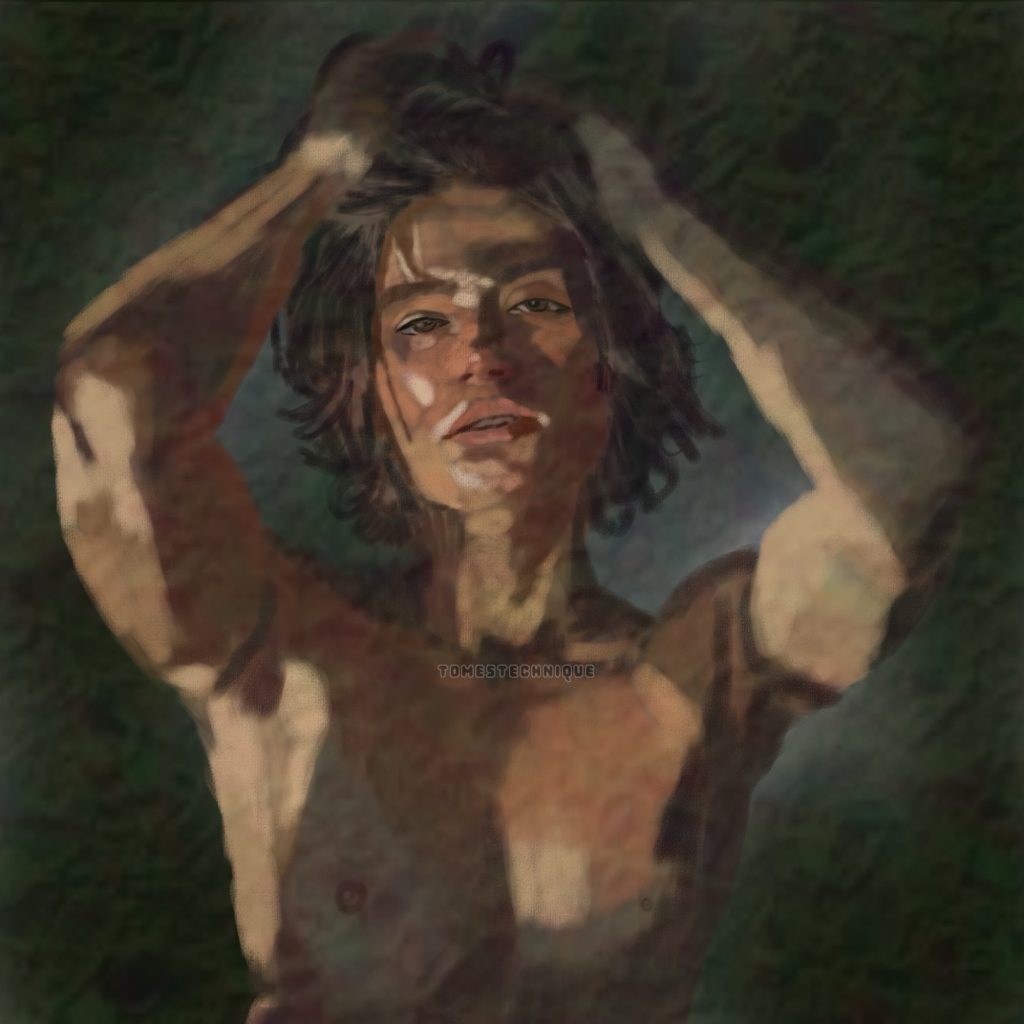
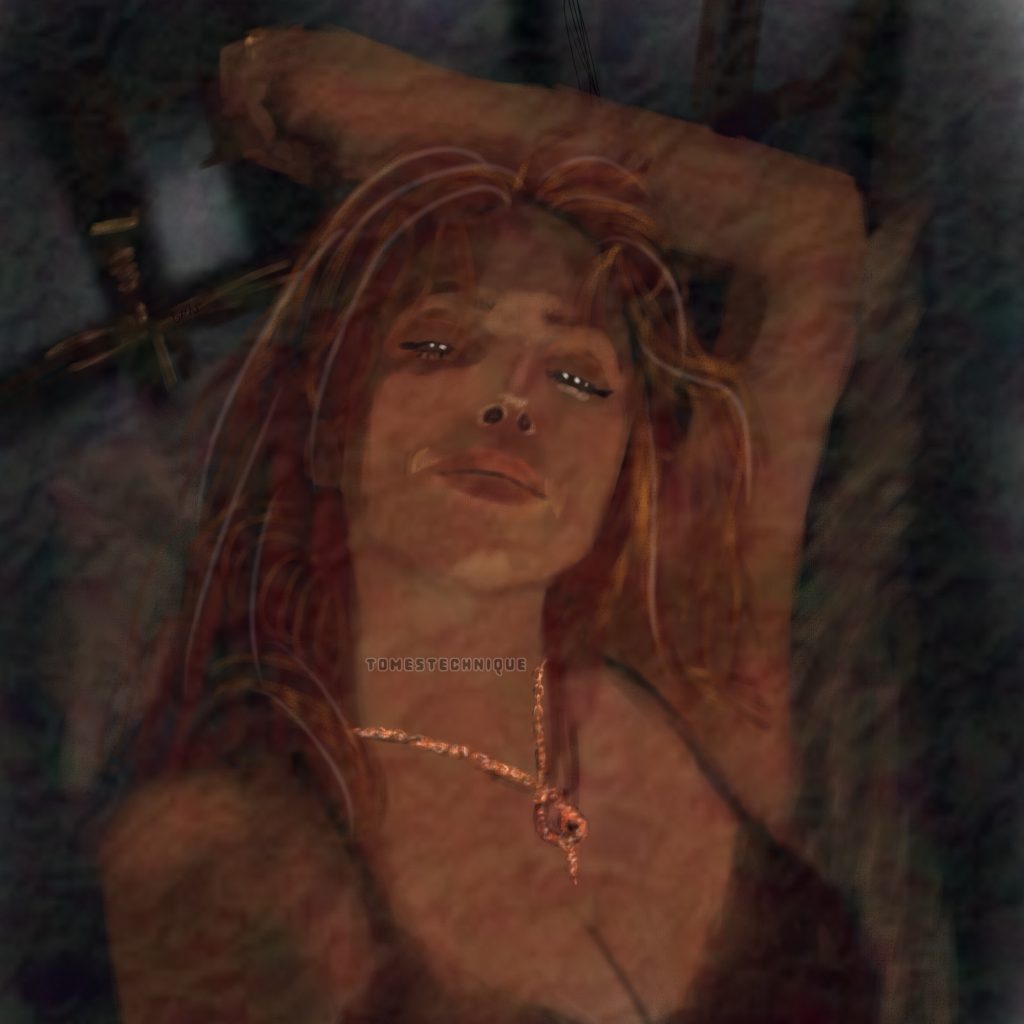
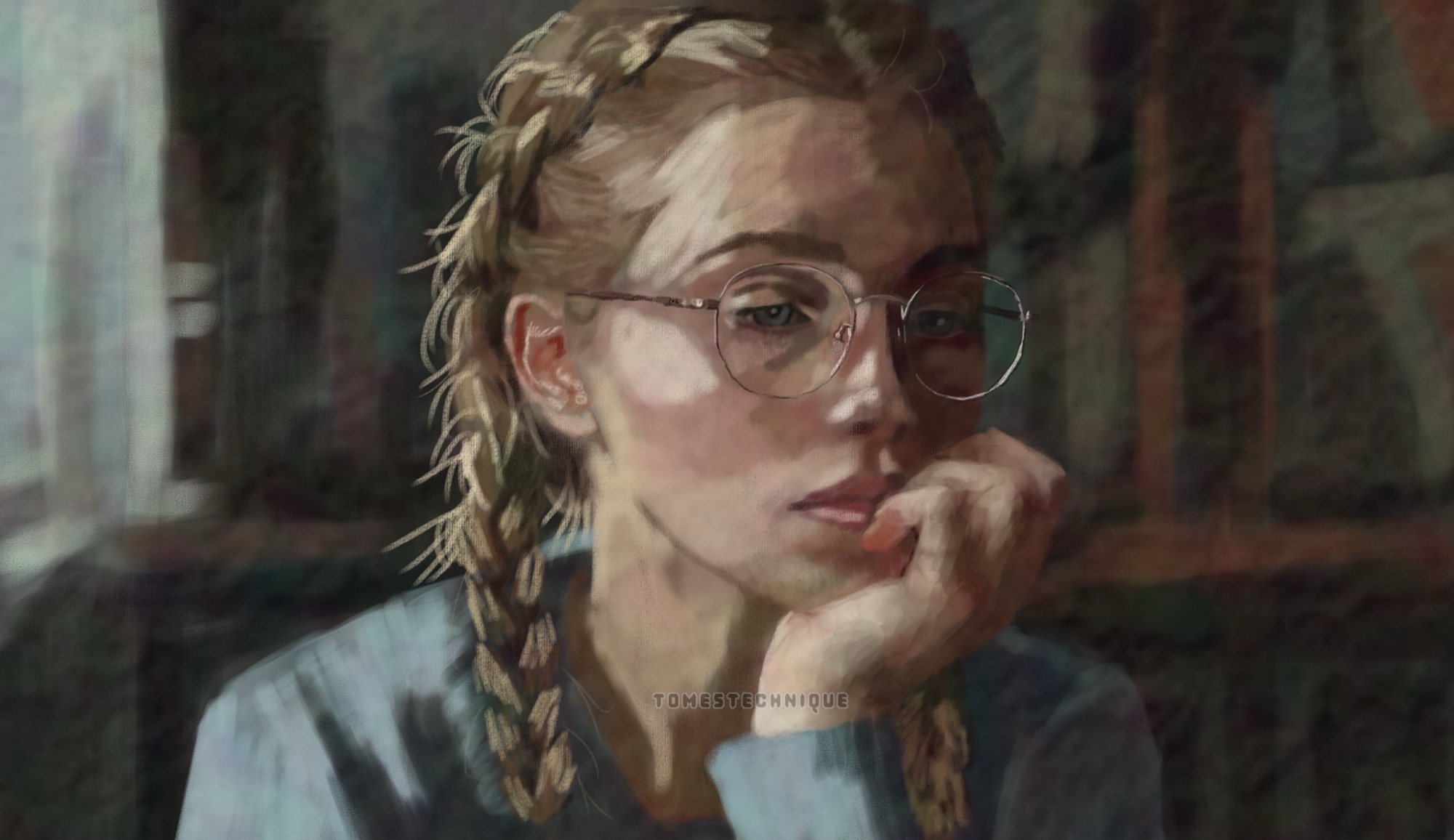
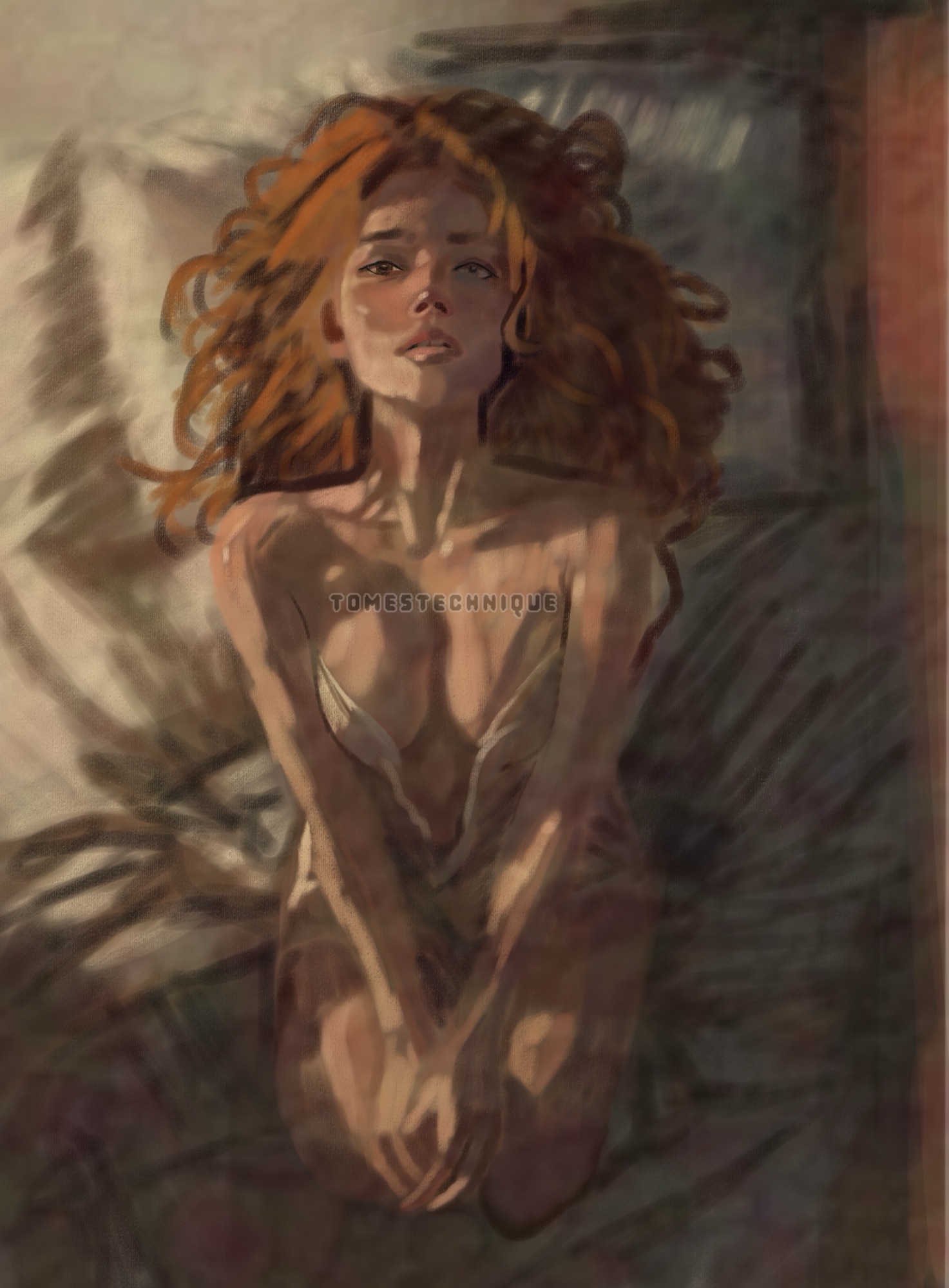
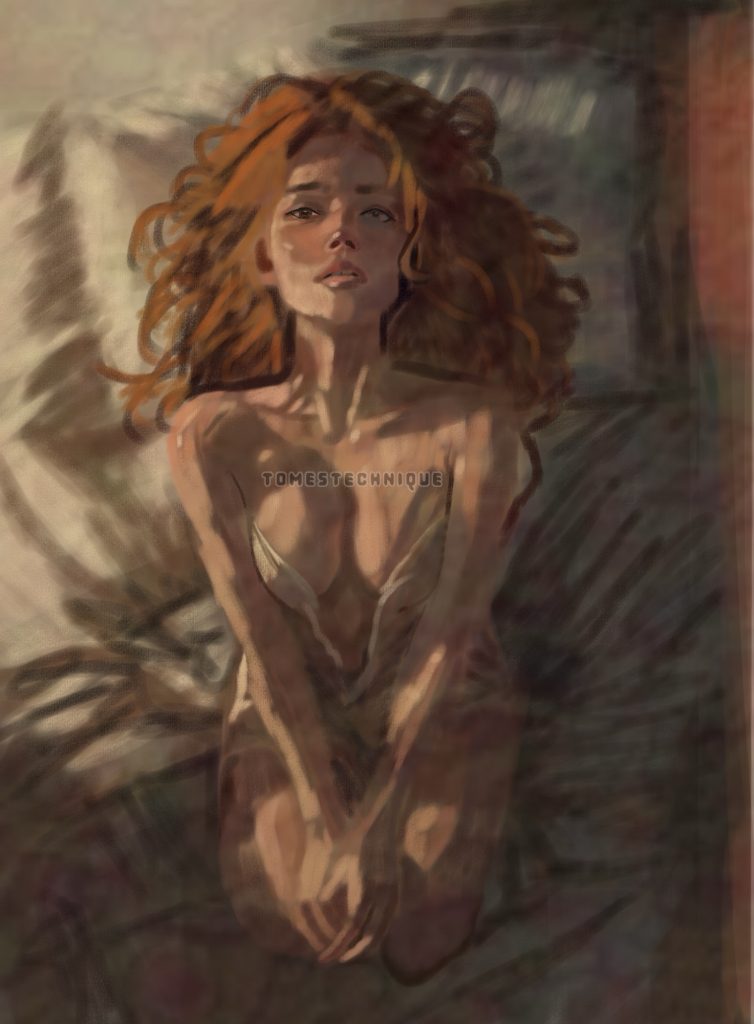
    I’m still thinking about musculature. The delicate frame of collarbones against the steep architecture of cheekbones. A study in contrast. The collarbones are shallow riverbeds; the cheekbones, sheer cliff faces. Light pools in one and fractures against the other. Somewhere between those landscapes, a face emerges. I began by studying her anatomy. Instead, I found myself tracing the contours of my own fascination.

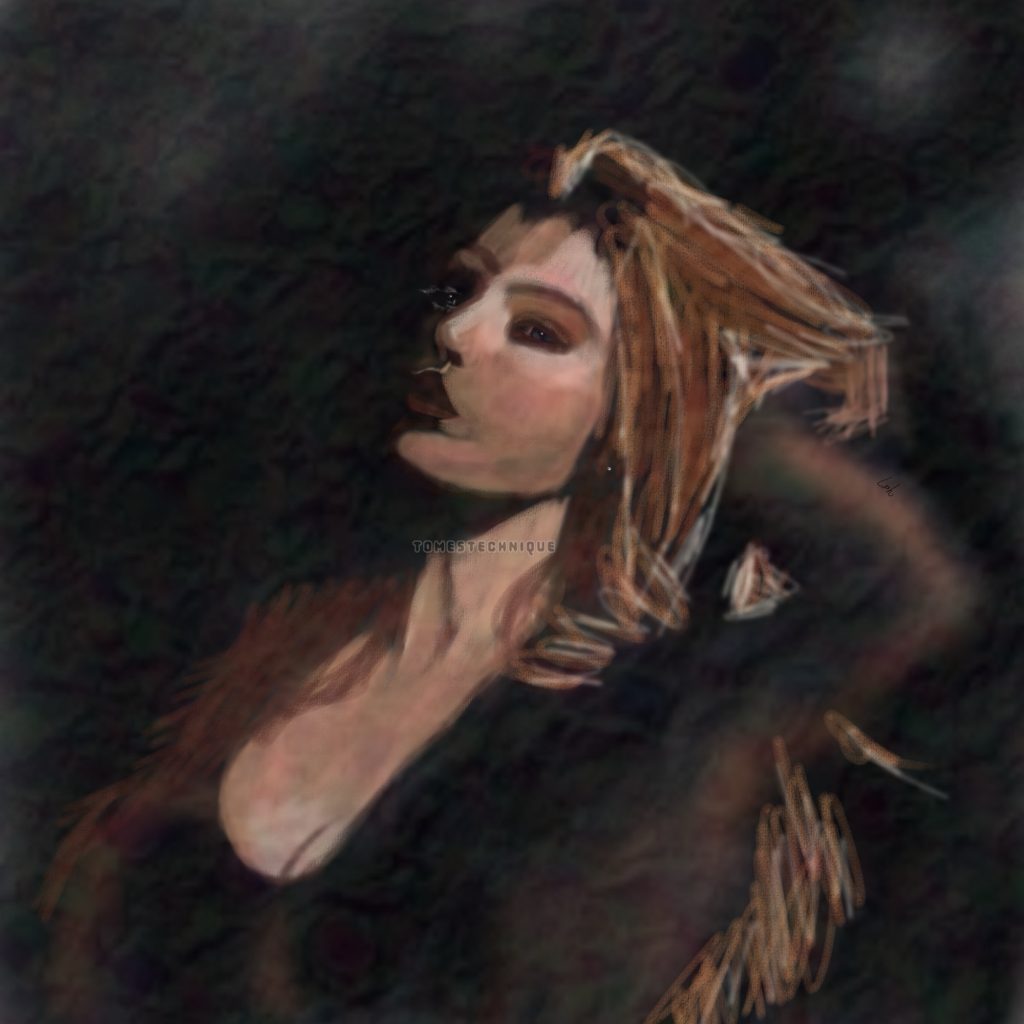
    Her light defies boundaries. Whether it spills outward or burns from within, it arrives with the certainty of dawn. Some people inherit an era; others become one. This is her golden age. I wanted to paint illumination. The canvas quietly revealed what I admire most.

    She embodies tomorrow’s promises, eyes fixed on horizons that haven’t been drawn yet. Every kingdom begins as a possibility. She seems determined to collect them all. The future in her gaze feels strangely familiar. Perhaps every horizon I paint is one I’m still chasing myself.

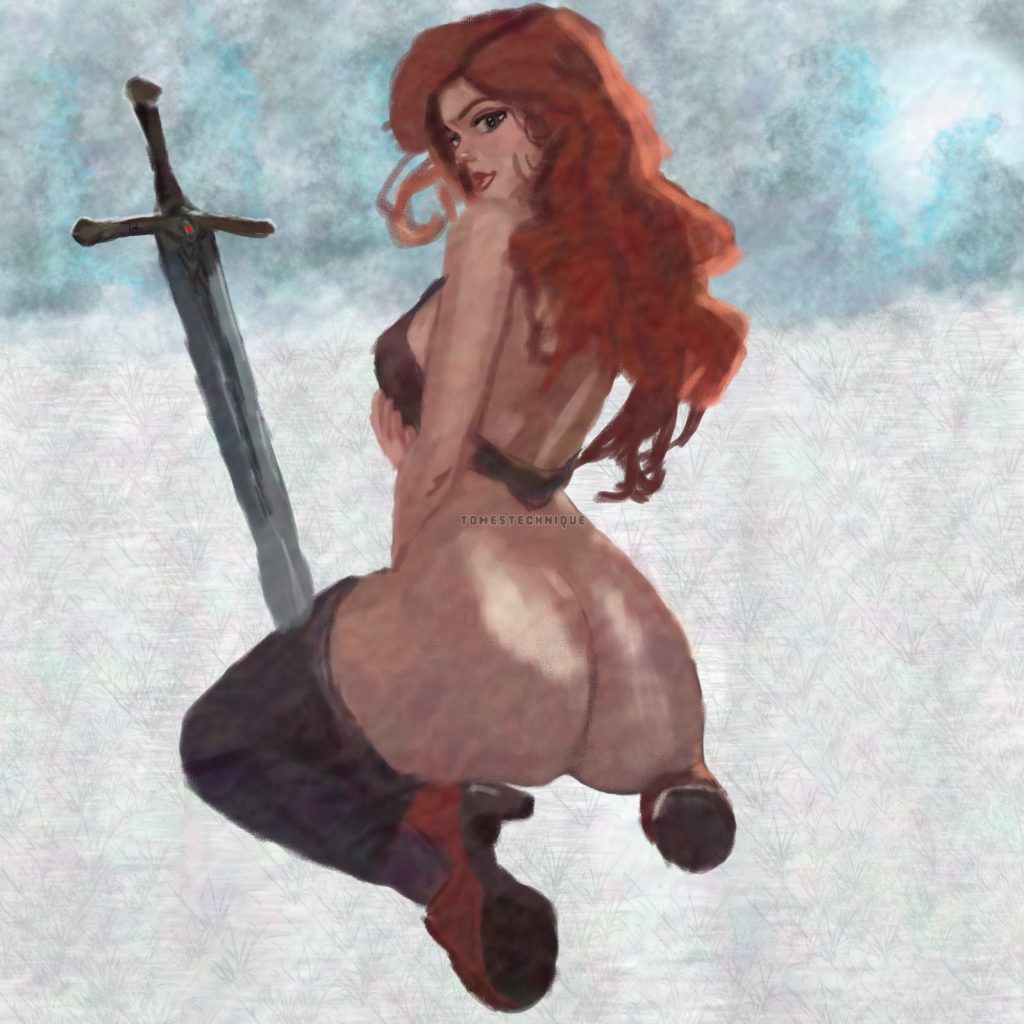
    The blueprint called for leather and silk. Noble fantasy. Heroic grandeur. The result, unfortunately, wandered into swordplay smut before I could stop it. Somewhere between reference and render, the painting developed its own agenda. Art has an annoying habit of exposing interests I’d rather pretend were accidental.

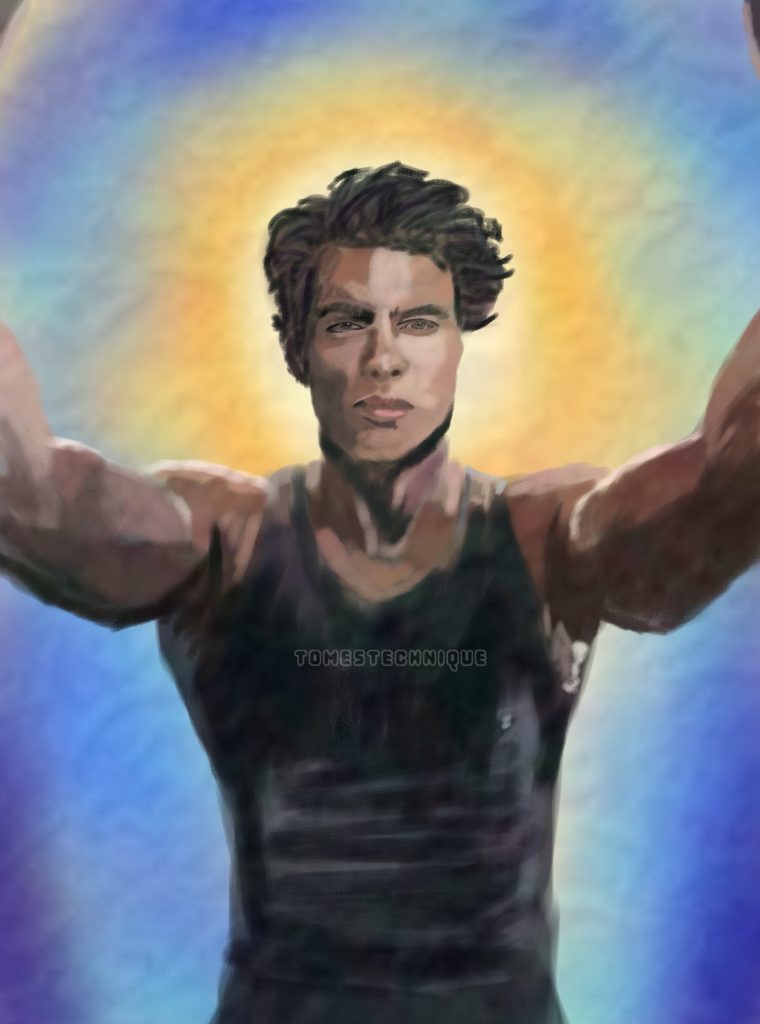
    I try to sculpt a traditional masculinity, but my hands refuse. Every man I draw carries a delicate, homoerotic grace. I chase broad shoulders, hard angles, certainty. Instead, I find softness hidden beneath strength, vulnerability tucked inside power. The silhouette changes, but the current remains. Perhaps hyper-masculinity isn’t difficult to draw because it’s unfamiliar. Perhaps it’s difficult because it conceals the very thing I’m trying to reveal. The figure stands before me, but the question keeps turning back around.

    “Give him longer hair,” my bestie suggests. I try. The render rebels. He refuses every version of it. His muscles migrate when I’m not looking. His jaw changes shape between saves. Like a stubborn actor, he keeps rewriting the role I’ve assigned him. The longer I work, the less the portrait becomes an act of creation and the more it feels like negotiation.

    I’m going round and round with these muscles, losing a war against anatomy. I circle the form like a besieging army, searching for a weakness in the structure. Every correction creates two new mistakes. Every victory reveals another flaw. The body remains unconquered, indifferent to my campaign. At some point, every anatomy study stops being about the body. It becomes a record of persistence, frustration, obsession. A self-portrait hiding inside someone else’s skin.

  • Alchemy of the Interval

    Alchemy of the Interval

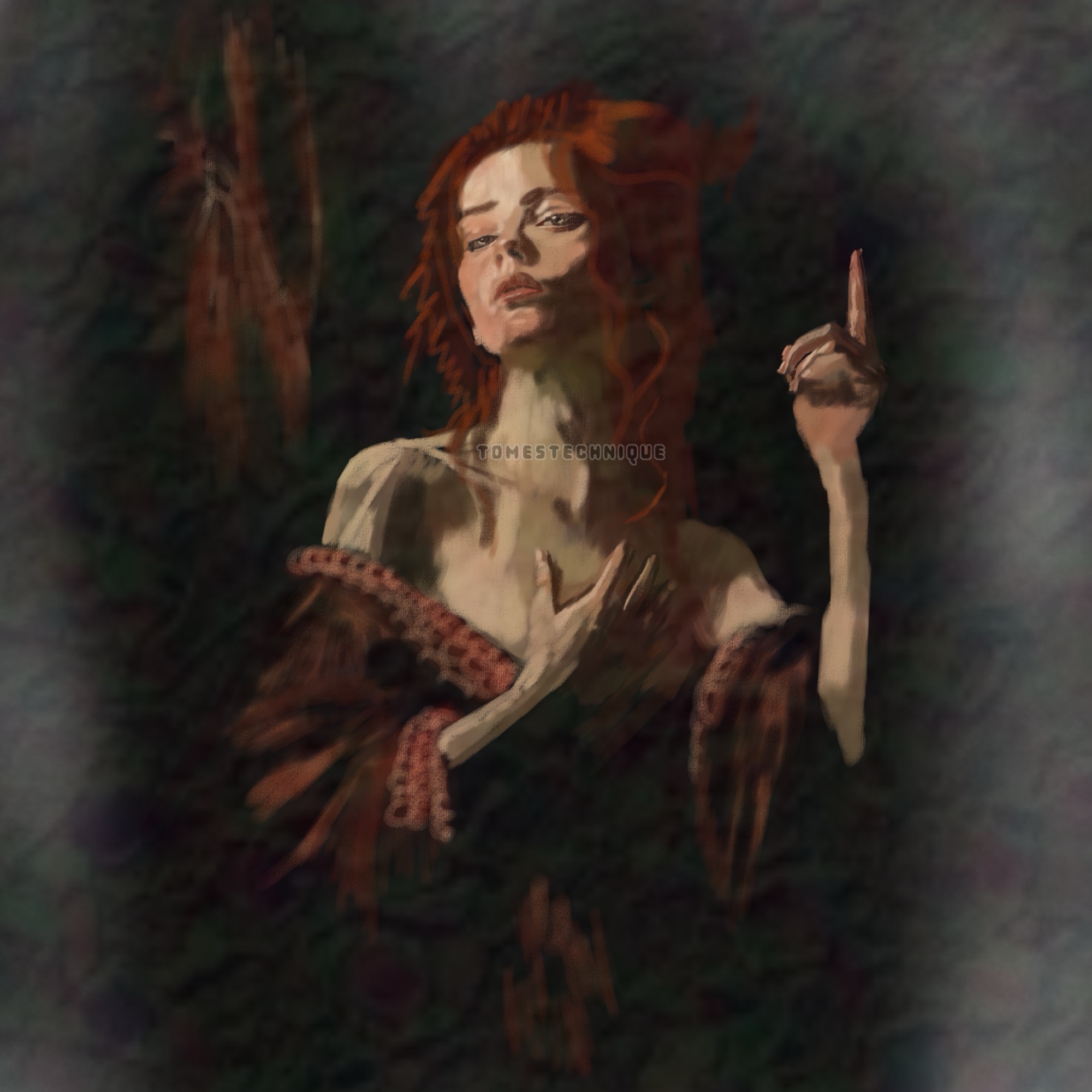
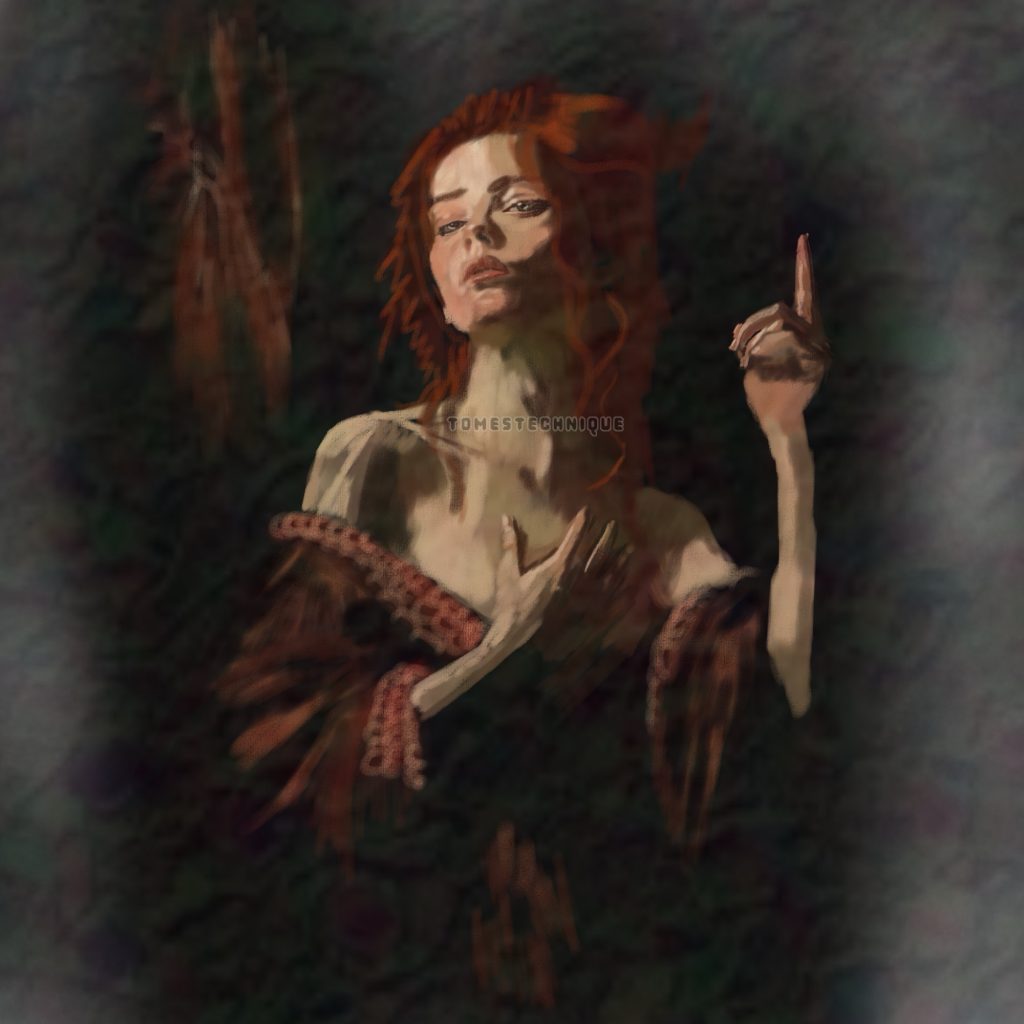
    It’s time to appreciate the masters again. As if there’s ever a time not to. Today, I am caught between the stark drama of Caravaggio’s shadows and the anatomical grace of da Vinci. My stylus trembles against the glass, searching for that elusive sfumato where bone yields to breath, where structure softens into spirit, and shadow forgets where it ends and light begins.

    I’m toying with light and darkness. I love the way some paintings feel lit from within. Chiaroscuro demands honesty. It forces us to confront the hidden corners of the canvas, and the soul, revealing truths that can survive nowhere else: small lanterns sheltered inside the deepest, most velvet black.

    Sepia isn’t going to be unloved in this. Here, the light is a ghost- the warm, honeyed glow of a memory I can no longer touch. It clings to the edges of my vision like dust motes in an attic window, a beautiful ache for a moment that has irrevocably slipped into the past. If Caravaggio is the crisis, sepia is the aftermath. Not the wound itself, but the tenderness that remains after the pain has learned to whisper.

    Mortality has a way of sharpening one’s attention. My latest medical reports became an unlikely teacher. I’m reminded to find the beauty in the little things. In that sterile landscape of black-and-white data, I discovered a strange, quiet grace. A moment where the clinical chaos hushes, and the small, overlooked details bloom into something profound. I gathered those discarded remnants—the broken edges of what was deemed useless or failing—and held them to the light. In the shaping, I found a strange alchemy: the refuse yields not to decay, but to an unexpected, wild resurgence. The diagnosis is not the destination; it is merely another horizon, another seam where shadow negotiates with light.

    I’ve completed this doodle before, though in another season of myself. I didn’t even recall the old lines until I’d already completed this version—as if my hand remembered the path before my mind did. 

    I have rendered a winter version of this scene before, cold and exposed. Then, it was merely an exercise in reclamation; now I understand it differently. The briars are not obstacles. They are architects. This time, they weave shelter from ruin, proving that even the sharpest fragments can become the framework of sanctuary. Tonight, as the day surrenders to dusk, the world dissolves into the realm of the hidden. Below the canopy, the fairy forest awakens. Its glow is the only witness to the magic whispered by the fading light, a summer restoration of what winter froze in place. It thrives, not despite the coming darkness but because of it. Its violet glow gathers in the spaces daylight cannot enter, reclaiming what frost merely borrowed.

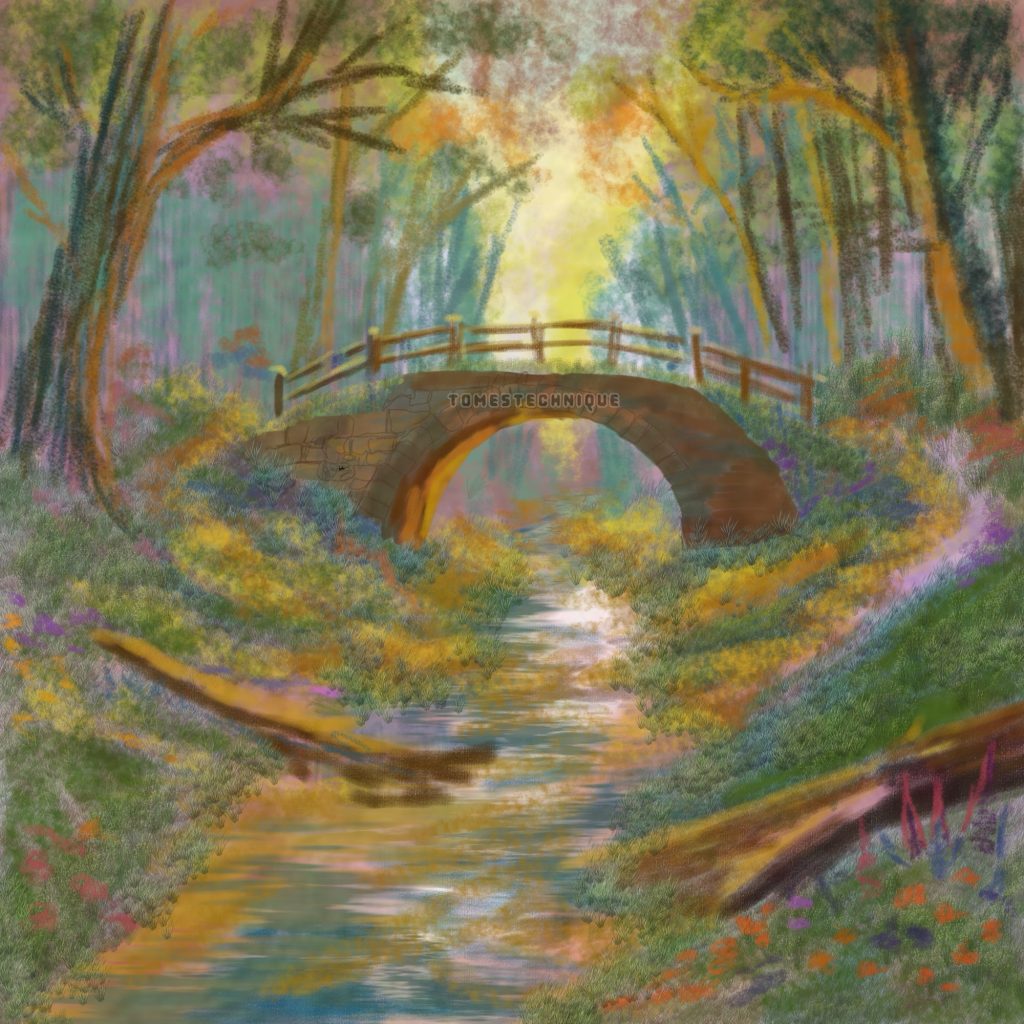
    The crossing demands everything. It is a passage through untamed green—a baptism by nature, where every step is a commitment to leaving the known behind and embracing the wild promise of the unknown. Armed only with a trembling stylus and a soul schooled in shadows, I step into the thicket. Whatever waits beyond is unknowable. The crossing asks not for certainty, only for willingness.

  • Composition

    Composition

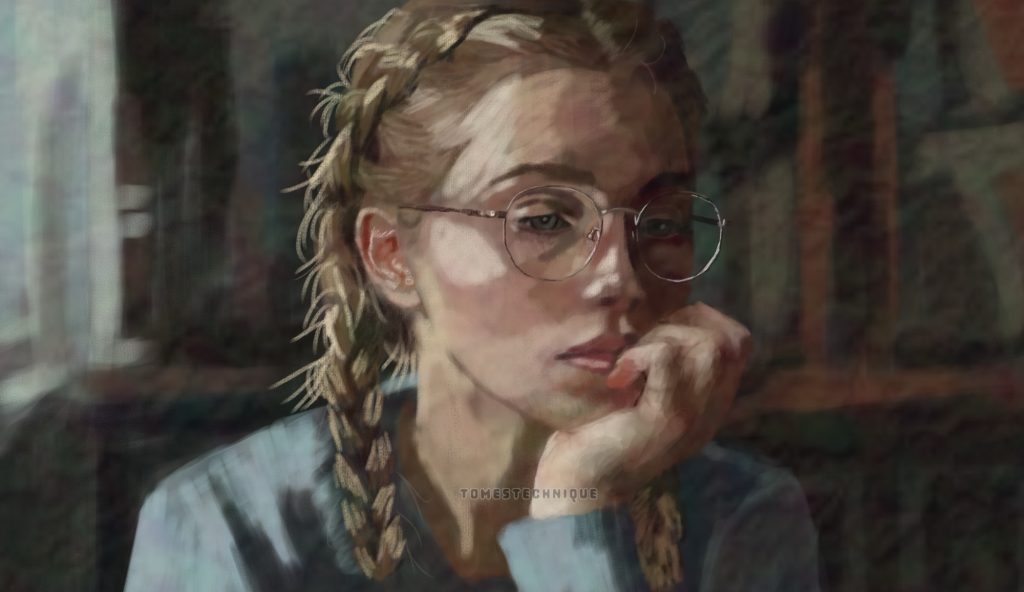
    My mind is a constant, fractured symphony: A collision of muffled adlibs against the roar of a relentless bass line. Whispers give way, demanding a mundane moment be either shattered or swallowed whole. Music fracturing into frozen frames. Yet, sometimes the dissonance resolves. In the dappled light filtering through the window, the internal noise finally concedes, and for a single breath, my mind finds a fragile, crystalline peace.

    There is a threshold just beyond the doorway of today, a space where chronology dissolves. In that liquid time, moments circle and fold back upon themselves, untethered from linearity. What has been and what might be coexist here, suspended in a single, shimmering breath. 

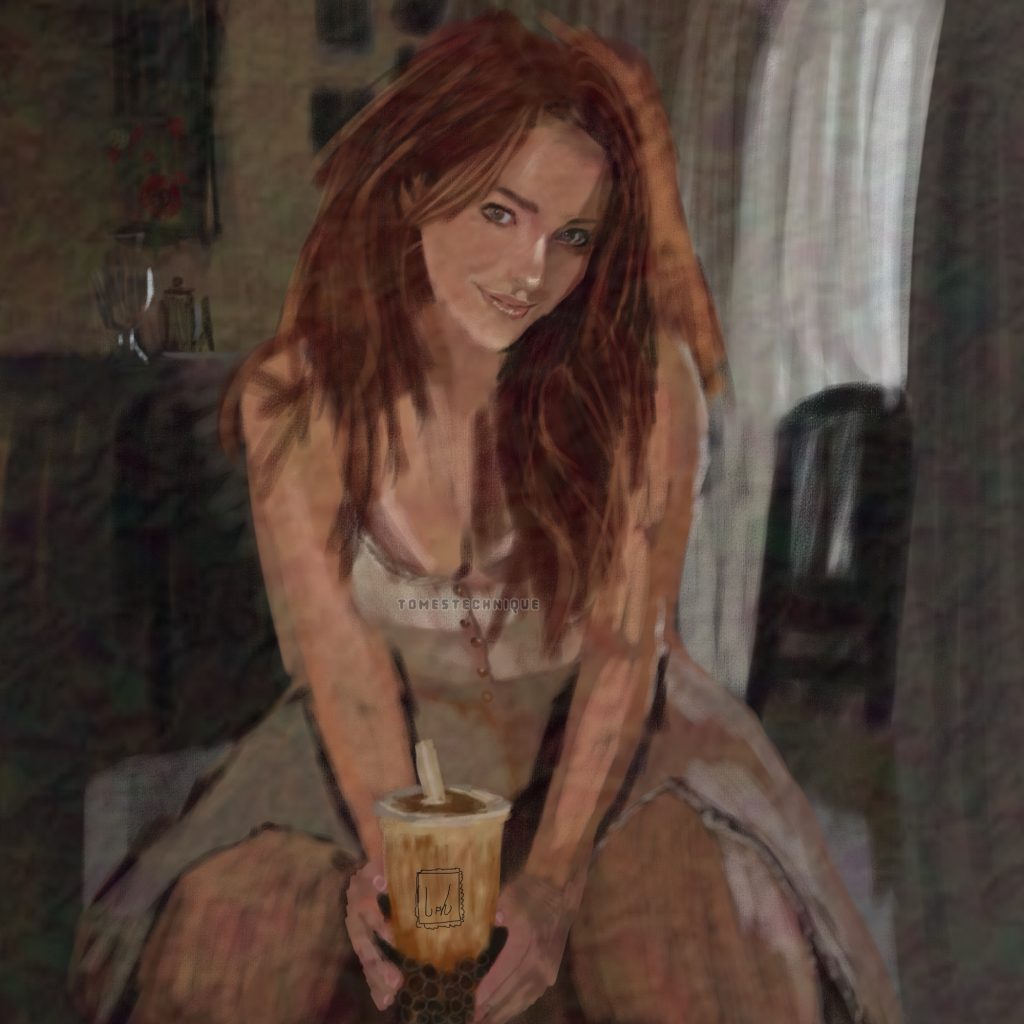
    This internal turbulence eventually demands an external anchor, manifesting as a sharp, guilty addiction: the sweet gravity of brown sugar boba. Tiger milk tea is an expensive curse of luscious tapioca pearls suspended in amber. It is a craving so potent it demands a physical sacrifice; my thighs gladly offer themselves up as necessary tribute for the brief reprieve it grants. 

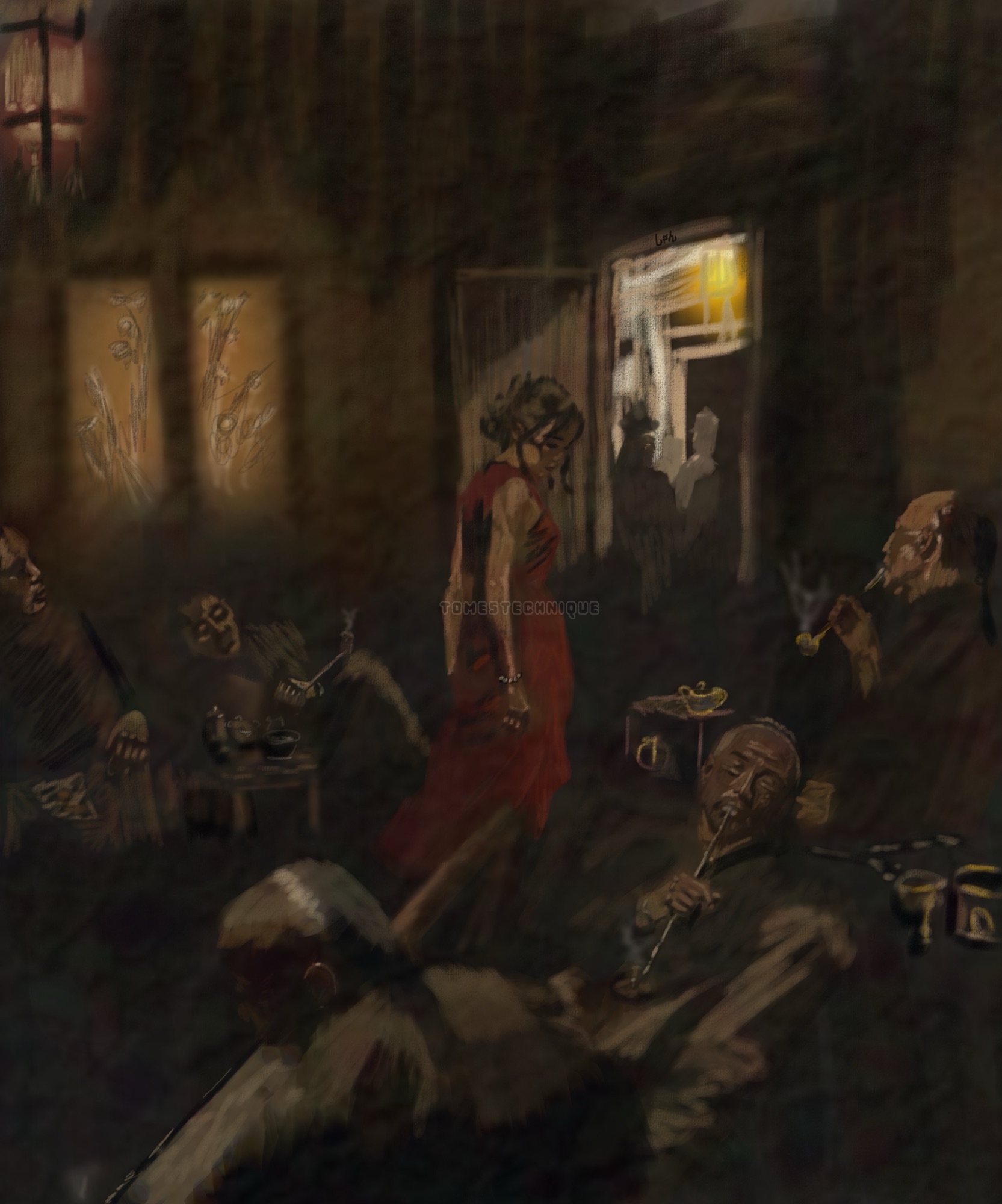
    When engaged, the silence breaks into a dare. She captures his gaze: a swift, silent entanglement. Like a cobra ensnared by the heavy current of a bassline, they move in a precise, breathless dance suspended between desire and dread. Her eyes hold the hypnotic and dangerous pull of music caught in a skipping loop.

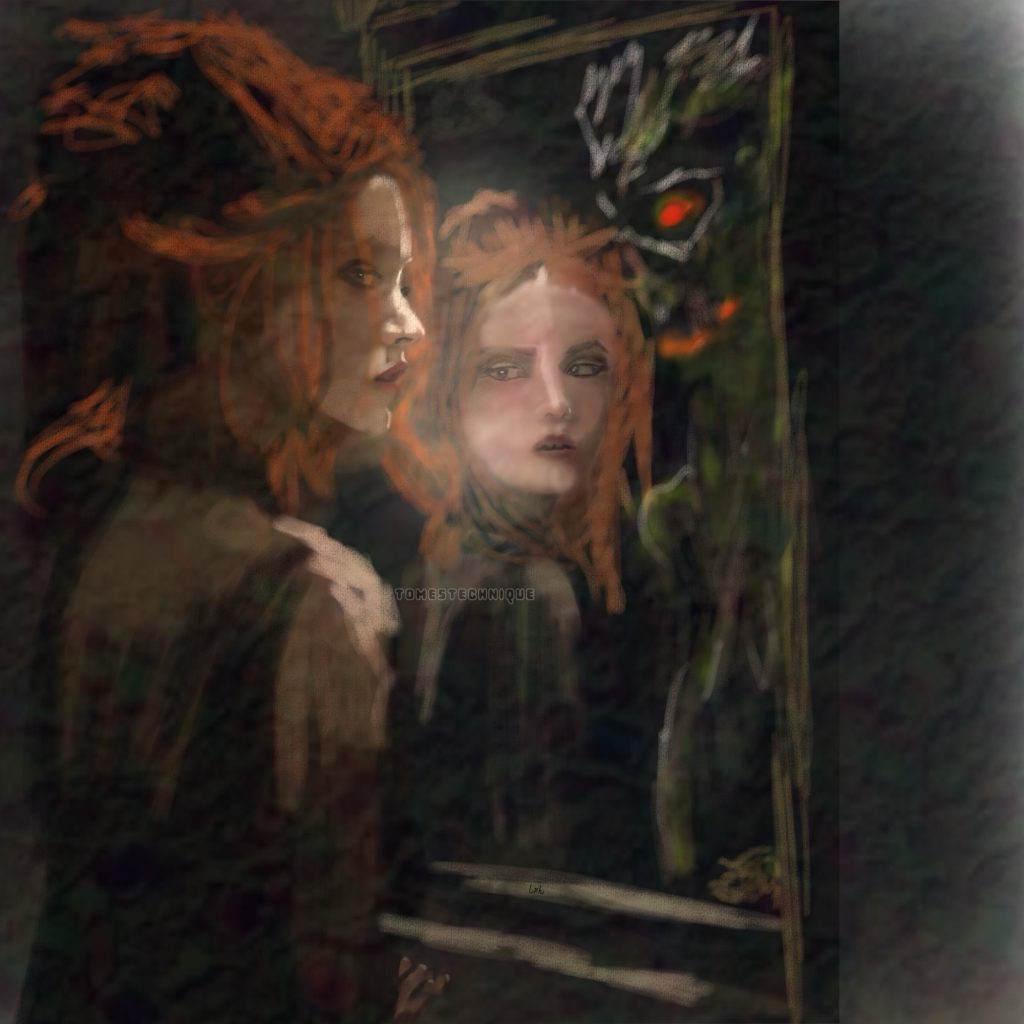
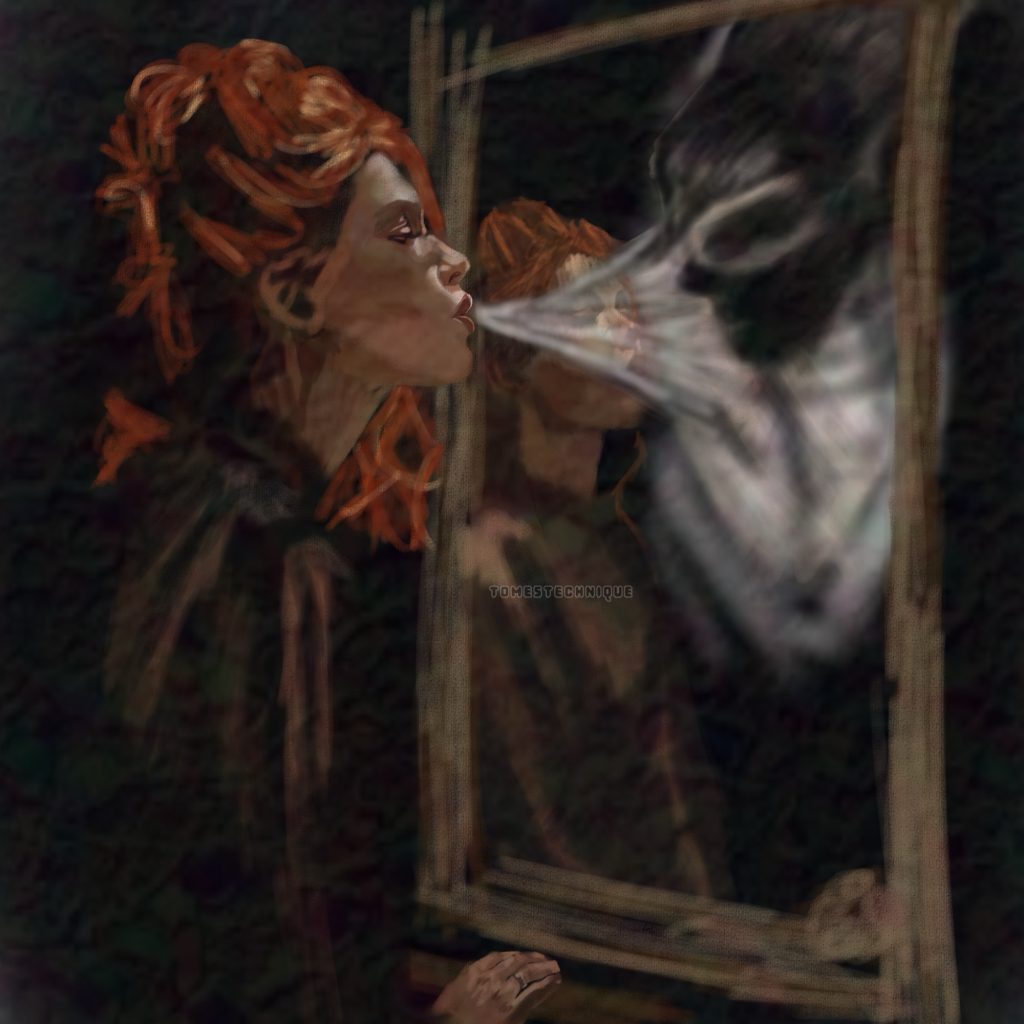
    Or I’ll huff and I’ll puff and I’ll blow your house down. I’m aimed at the foundation. It bypasses superficial fixes: polite smiles, forced deep breaths, carefully chosen anchors. Every trapped anxiety and chaotic rhythm gathers into a single kinetic exhale. The wolf within studies the fragile architecture of routine and composure, then wonders how much pressure it would take to make the whole thing fold. There is something intoxicating in that posture. Terrifying, too. Standing before a mirror, or beneath the gaze of someone who has held you captive, you realize you possess the power to dismantle everything with a single breath. It is the ultimate challenge to the universe: See how beautifully I’ve built this. Now watch how easily I can tear it down. Let’s find out what remains.

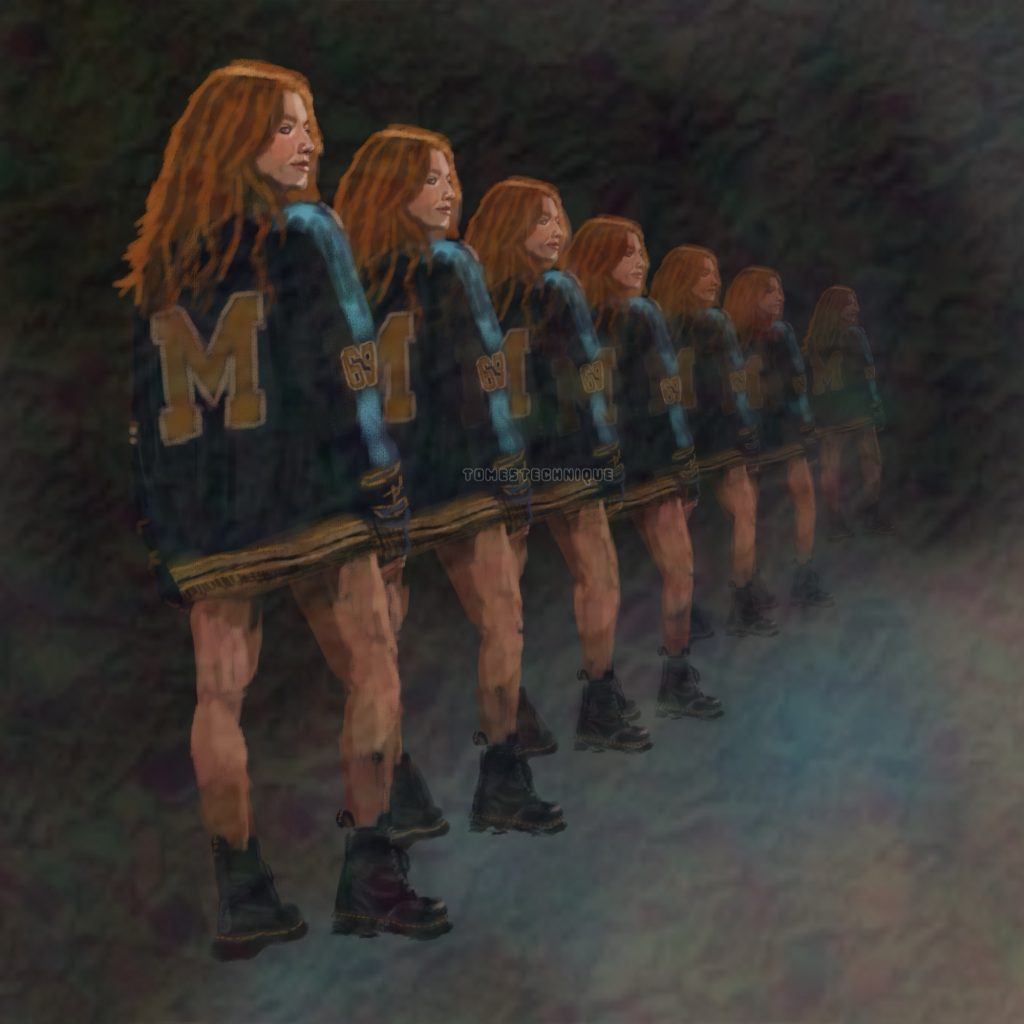
    This friction, this chaotic blend of rhythm and frozen kinetic energy, is no barrier. It is composition. The scattered notes of yesterday and the resounding beat of the present gradually braid themselves, transforming trapped energy into scaffolding. Friction weaves the song of the past into the structure of tomorrow’s dance.

  • Echoes

    Echoes

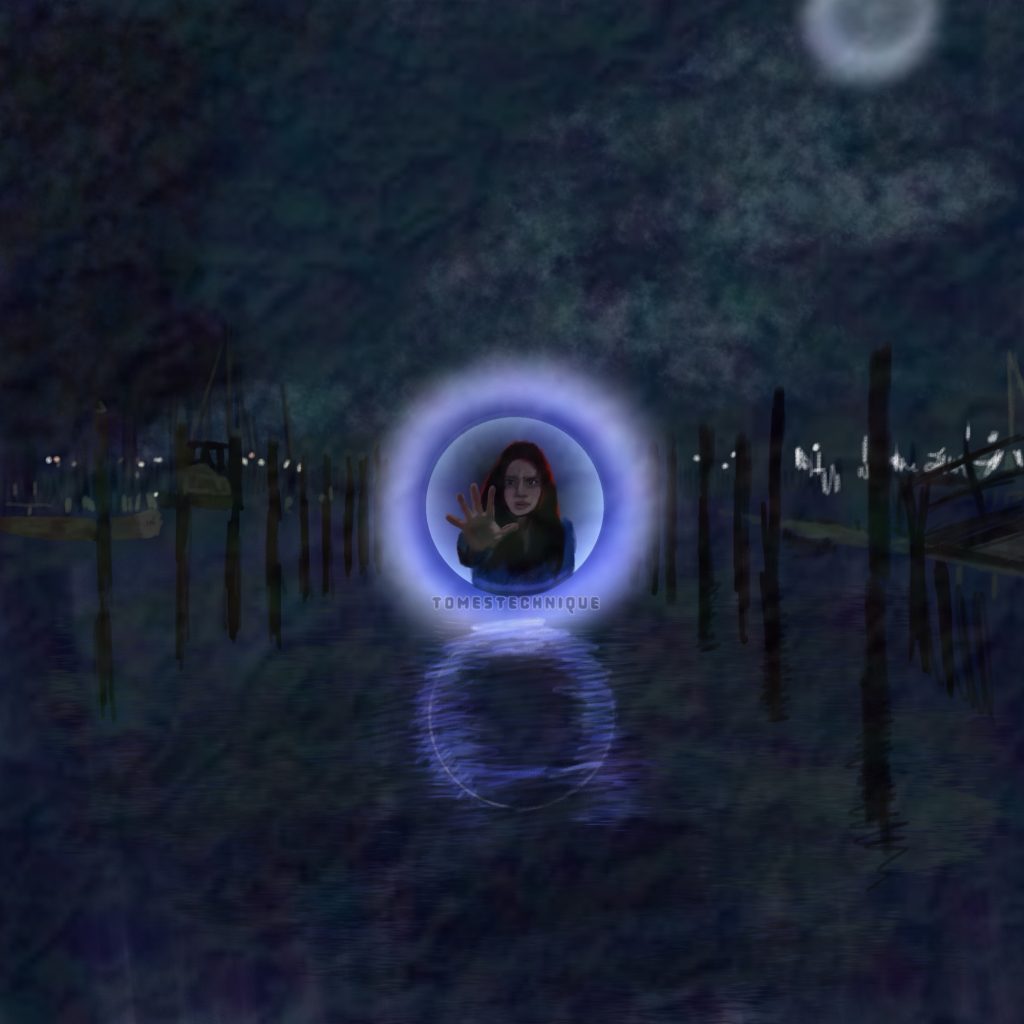
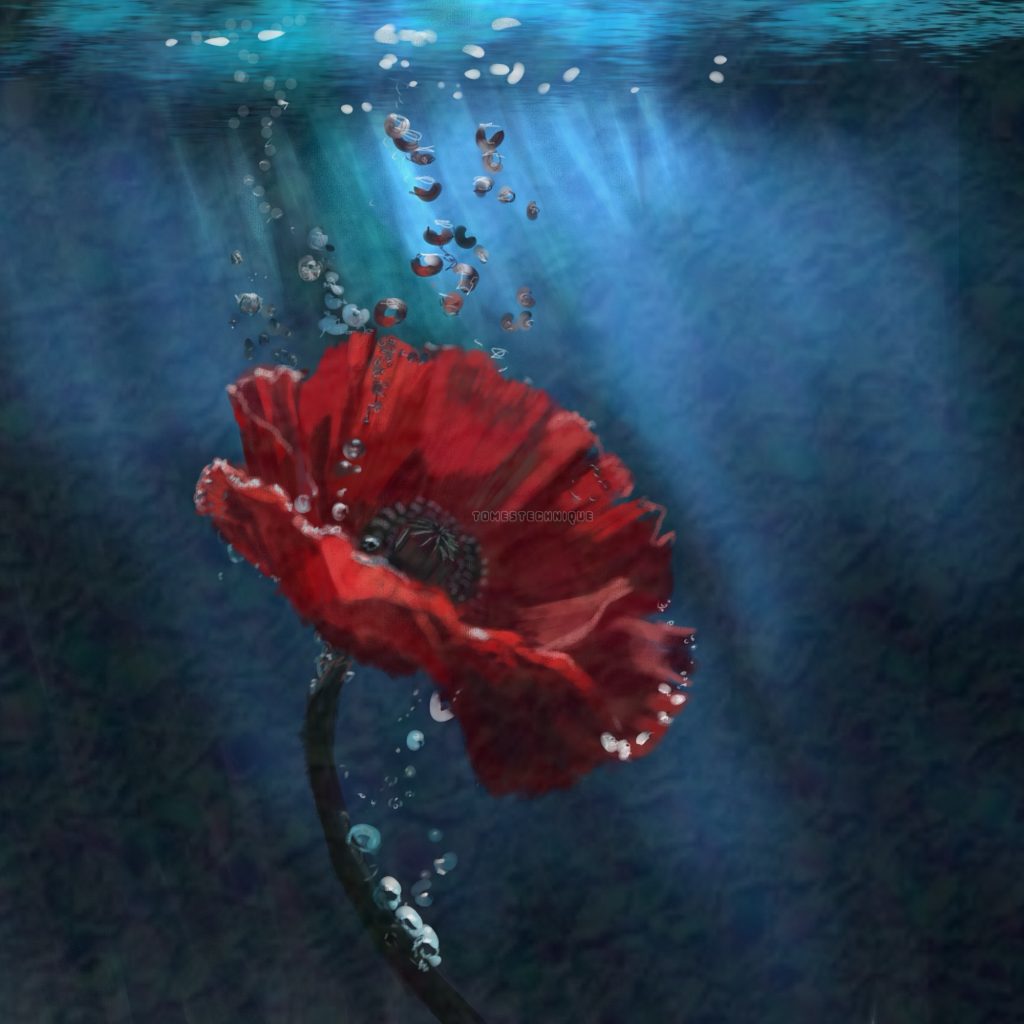
    Silence drowns. The deafening noise of its echo forces the heart to pulse high in the throat. Every unspoken word returns swollen from the dark, dragging seawater through the lungs.

    Everyone here knows what they came for

    The air tastes like decisions

    I can feel your eyes before I see them.

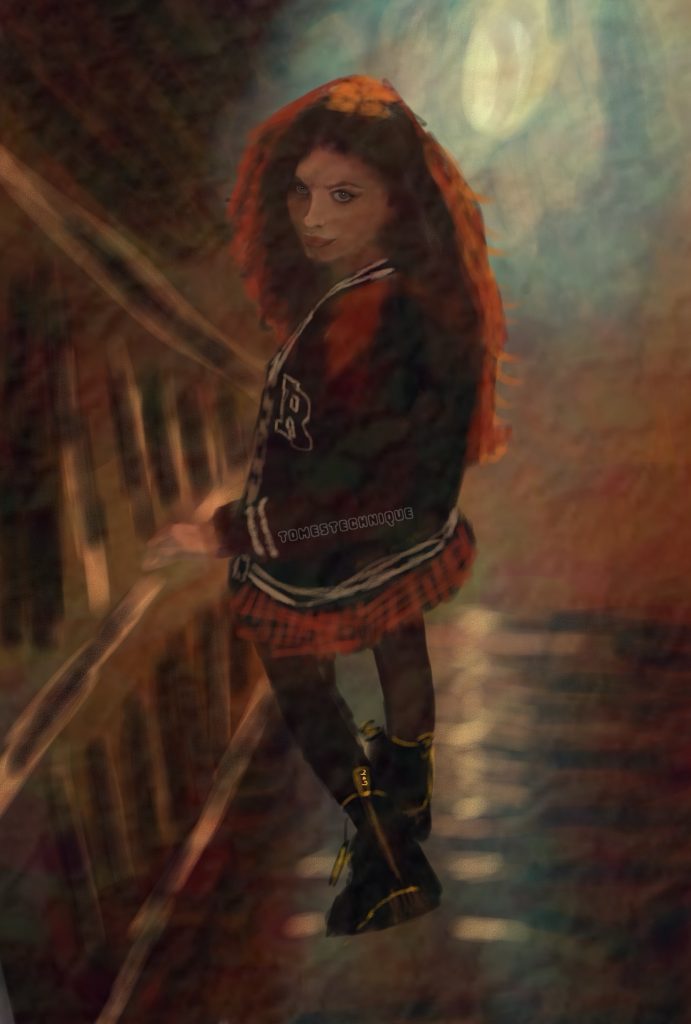
    The stairs creak in apprehension, begging her not to continue. Their cries fracture and multiply through the air, each step repeating itself like an argument already lost- a final, desperate plea to the senses.

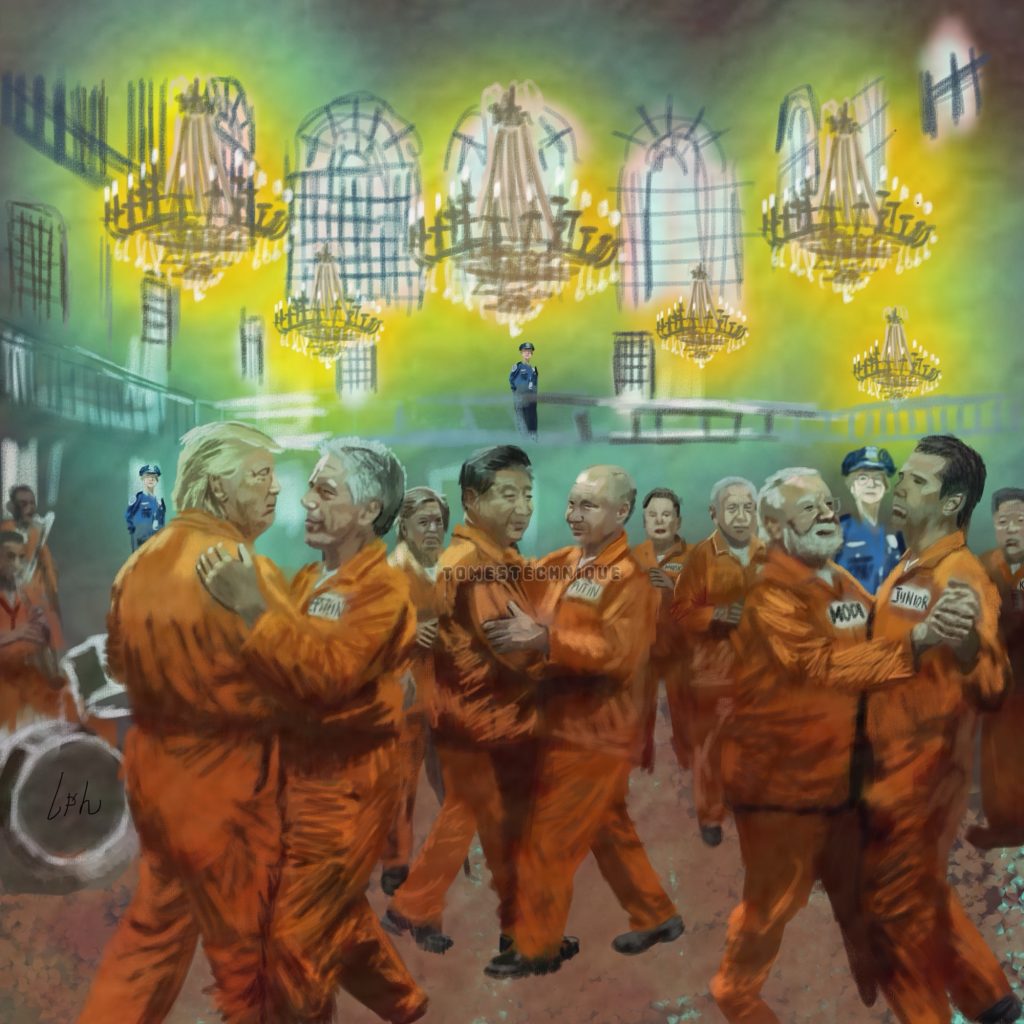
    Dance, dance until you drop. There’s always room on this phantom ballroom floor, and it only costs your soul to spin here. This dance is the ritual of reopening old wounds: an endless waltz of unsent messages, remembered inflections, and conversations replayed until they lose all resemblance to truth. It is simply memory wearing grooves into itself. The orchestra never tires. It plays with missing instruments and forgotten faces. Every song sounds familiar, yet none ever reach their ending.

    Still in your jacket, smells like smoke

    Every word you left still sticks in my throat

    Every stranger looks a little like you

    I keep searching the crowd, but I never break through

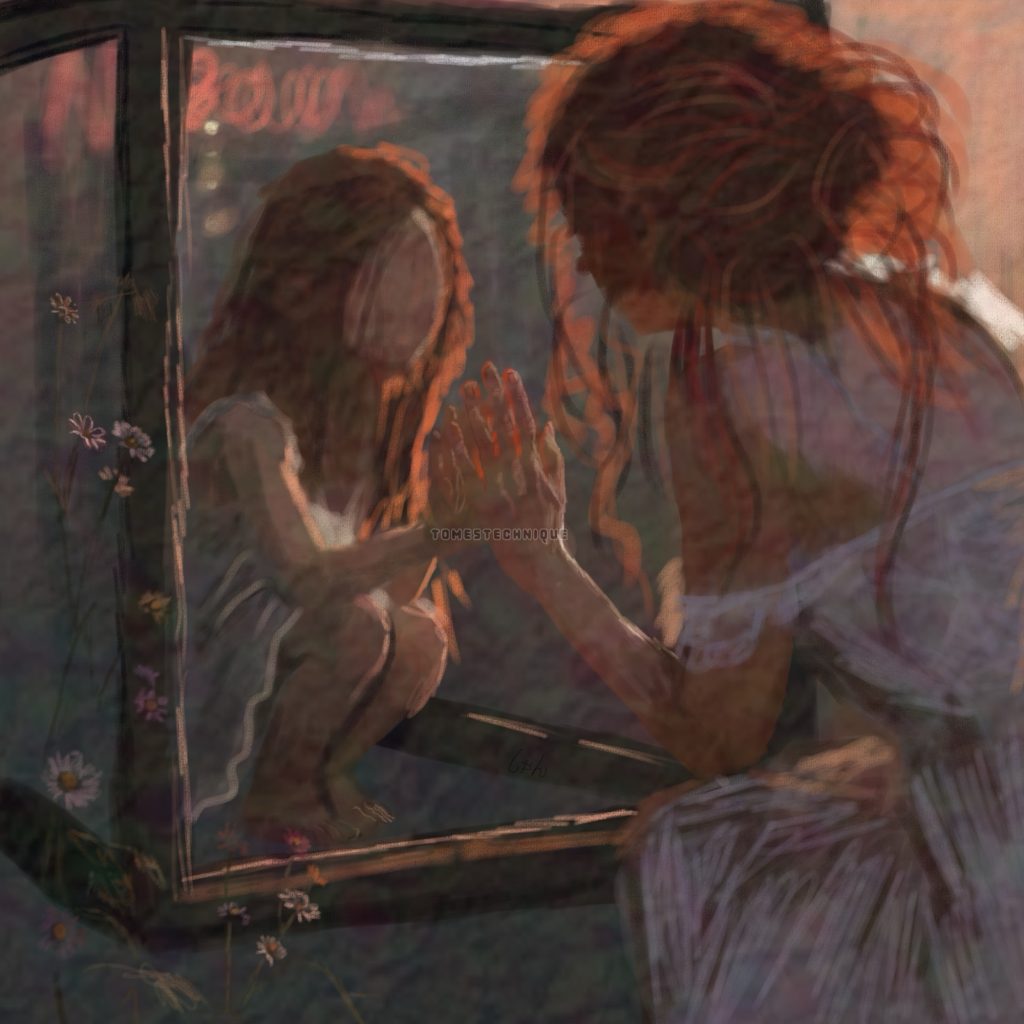
    The return is complete. She finds not an answer, but a ghost. For a moment I mistake her for someone else. A shimmer of the girl who believed in open skies, when horizons still looked like invitations rather than distances. Trapped behind the warped glass of memory. She is fragile, brittle, and still utterly convinced of a future that never materialized. Every breath catches on the silence where her certainty used to be.

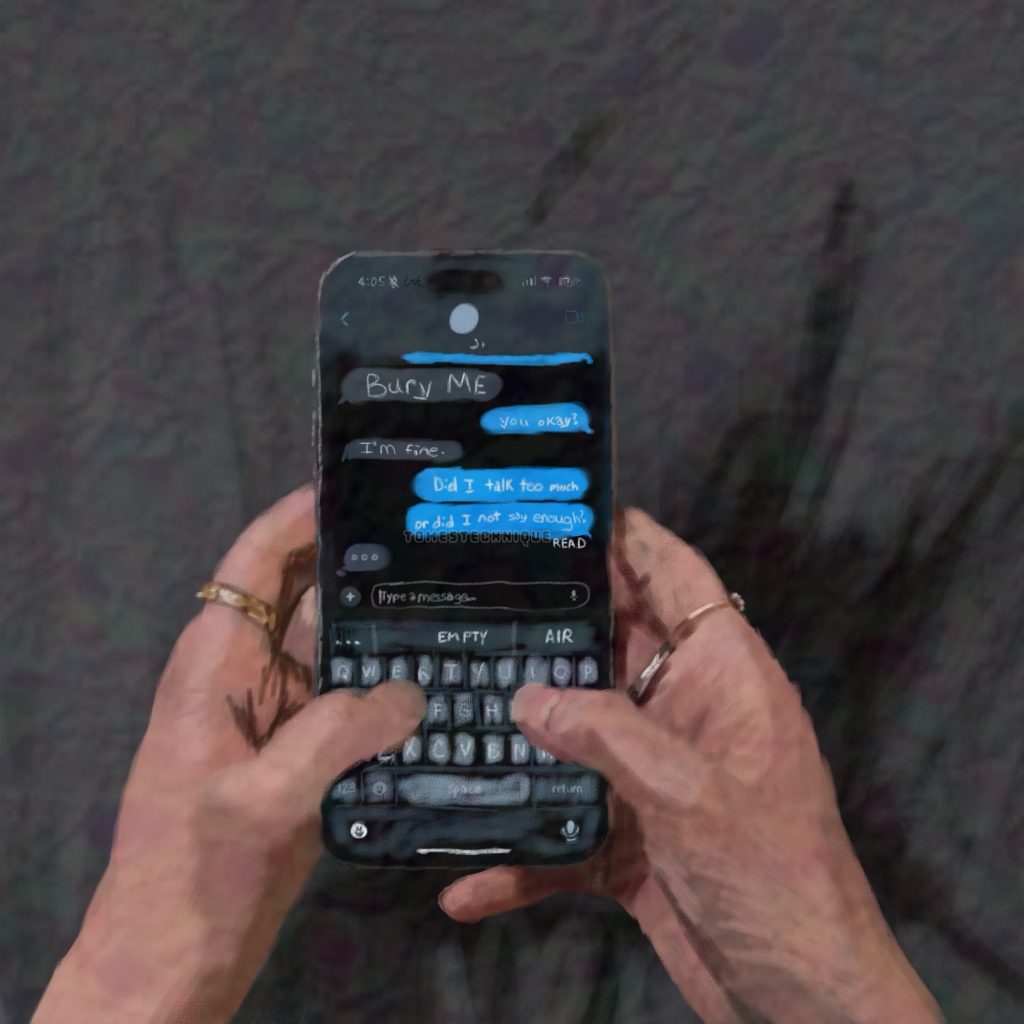
    The glow of the city’s bleedin’ into my room at 4 A.M.

    Another text that I’ll ignore, another reason to pretend

    That I’m fine, that I’m over it, that I’m not stuck inside this head

    With all the words I wanna say and all the things that I left unsaid.

    Before every horizon became another skyline, traded for streetlights and deadlines, those open skies meant something else. Before the city crowded them out. Now, that city light bleeds right through the glass, painting shadows across the walls like accusations. The same pale glow spills across the ballroom floor, illuminating the suffocating distance between who I am and who I was. It is a canyon bridged only by echoes- not memories, not truths, but the lingering shapes they left behind. Words I swore I would never speak still arrive at my door, wearing my voice.

  • Fingerprints

    Fingerprints

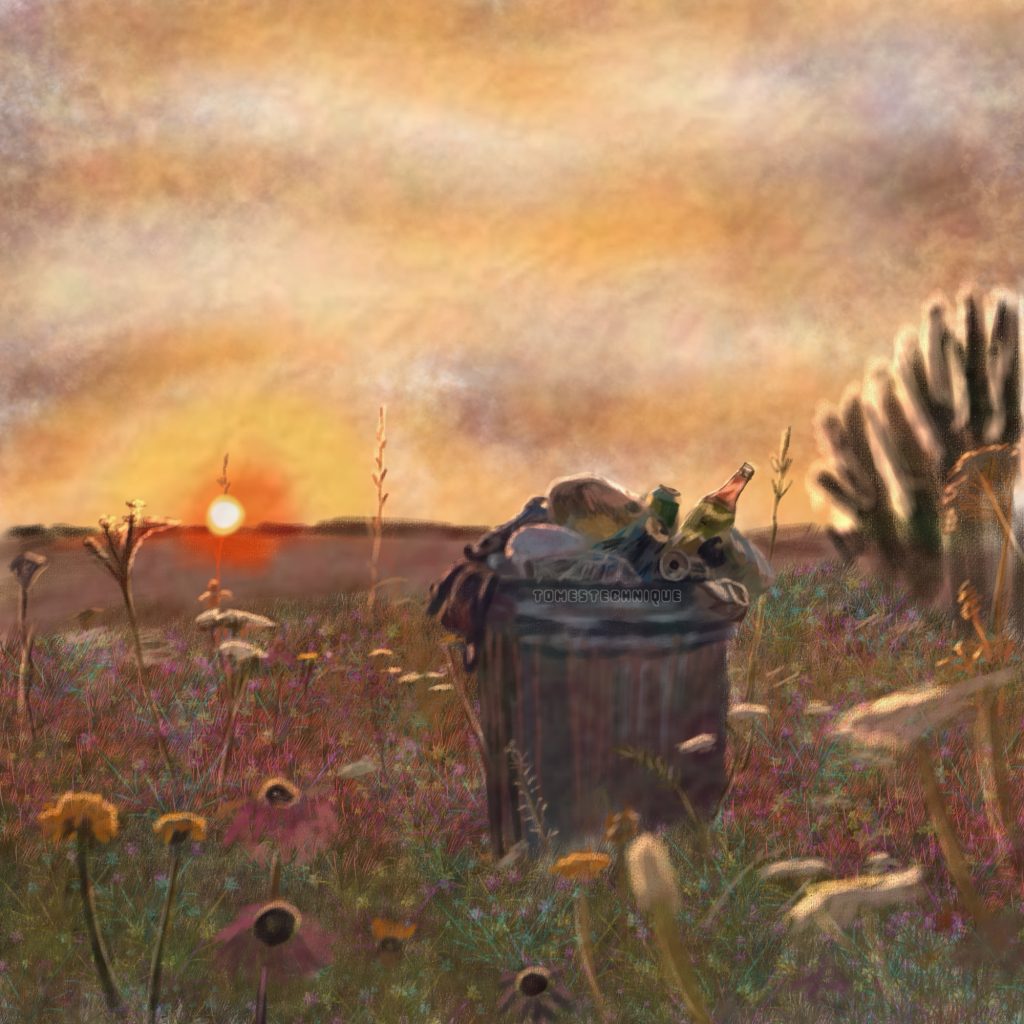
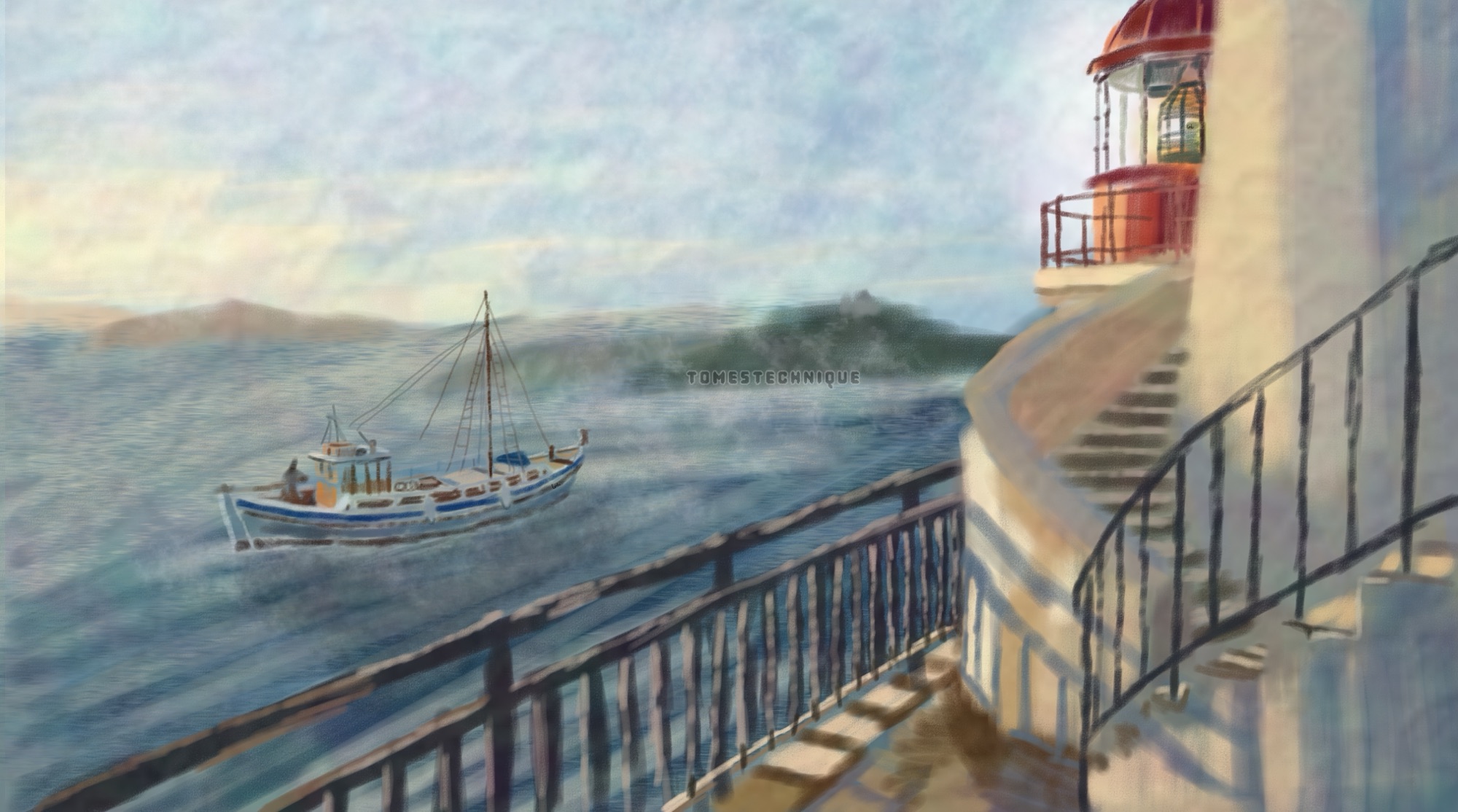
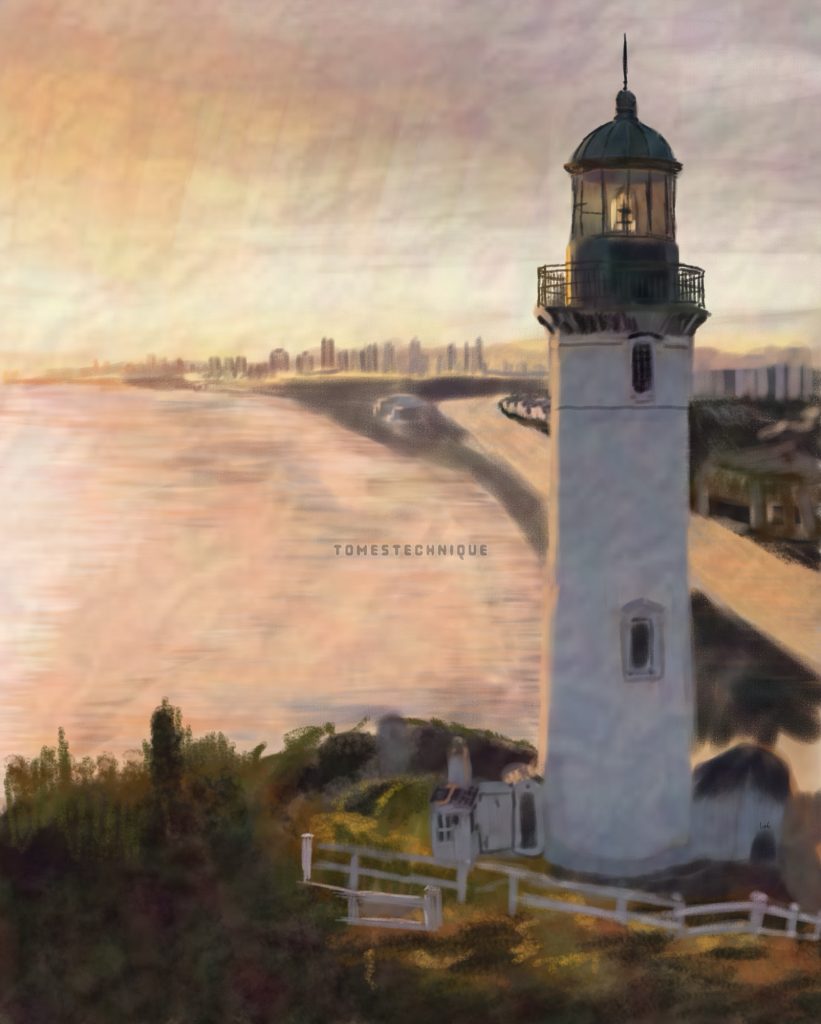
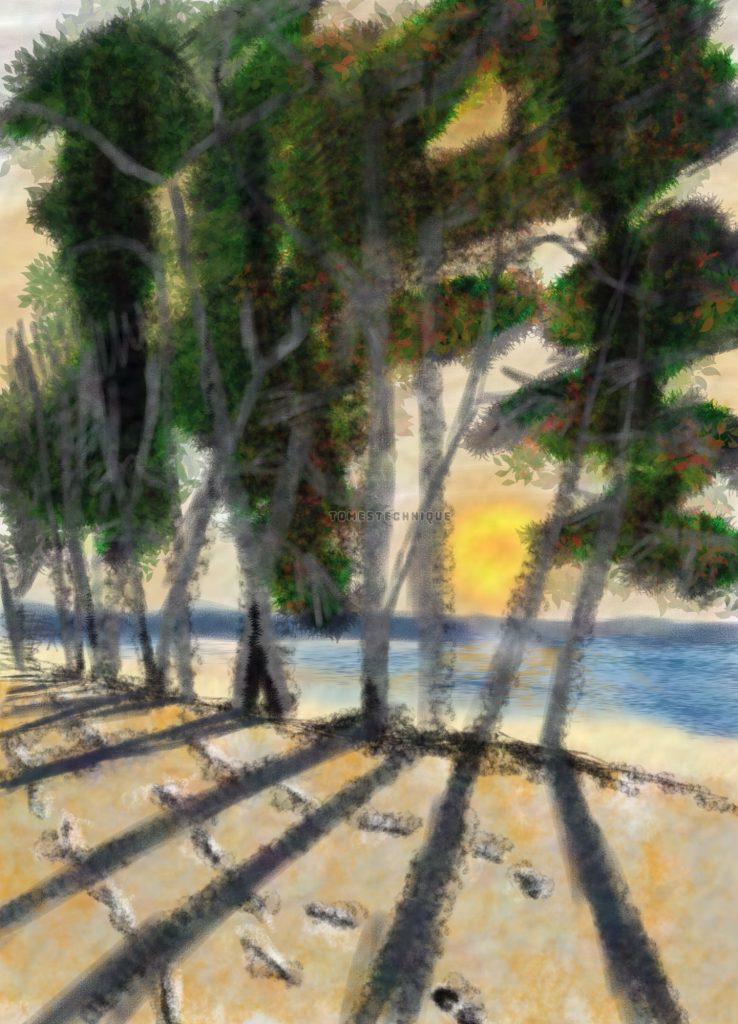
    The spray of the summer sea, the siren’s song, salty and grounding. The sun never sets here. It lingers just above the horizon, suspended between leaving and return, gilding the water in a permanent state of almost. It’s time for landscapes and nature doodles again. Small attempts at holding stillness in my hands before it slips back into the tide.

    I miss places my hands have never touched. The romanticized geography of a life not yet lived. Cliffs weathered smooth by saltwater, narrow roads vanishing into fog, windows glowing amber against the coming dusk. Sometimes longing arrives before experience ever does.

    Landscapes feel like borrowed memories from another life. Perhaps that’s why landscapes call to me the way they do, offering memory where none exists. Maybe that’s the inherent beauty of nature: it asks nothing of us except that we notice it. Even untouched wilderness can feel strangely familiar, as though the body remembers what the mind has forgotten.

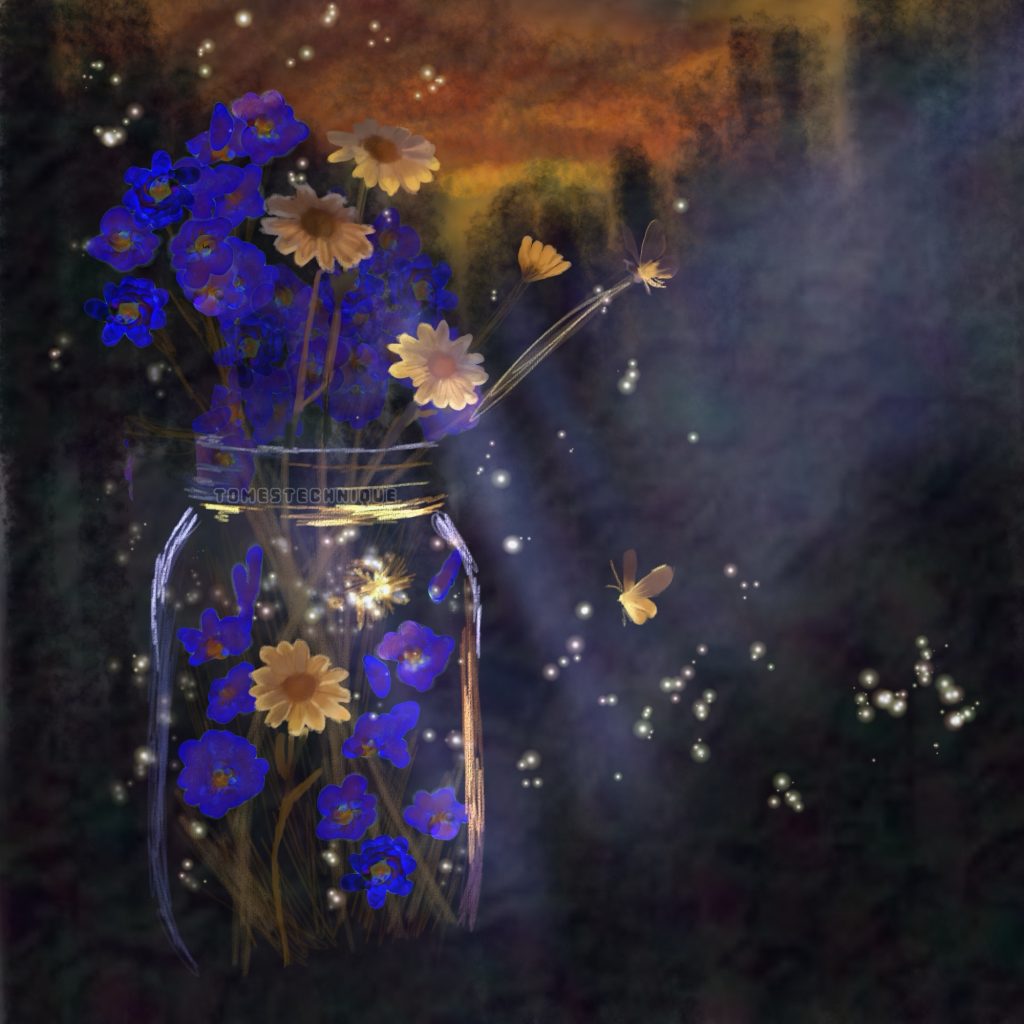
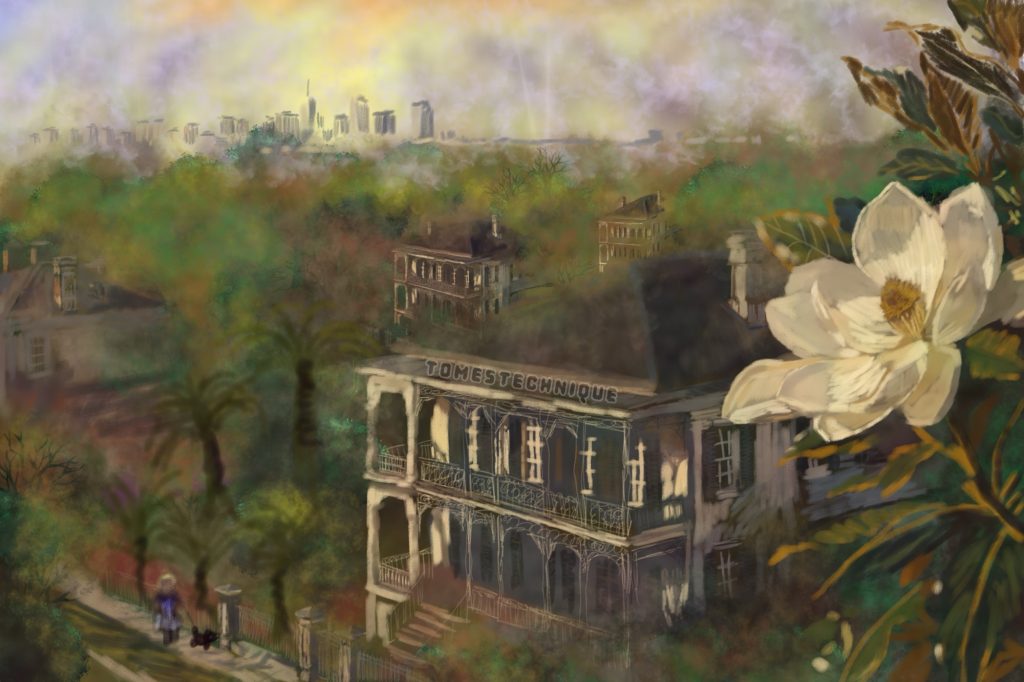
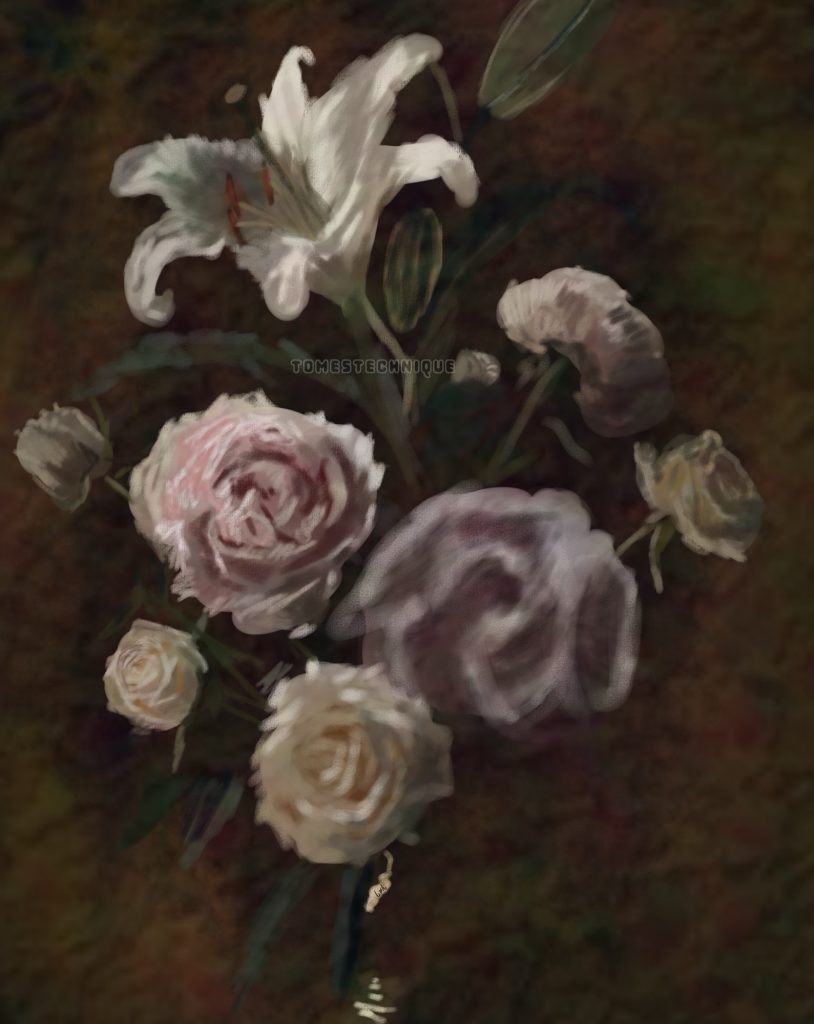
    Florals peeking from beneath the cork tree. A quiet little study in shade and softness. The sort of scene that feels half overheard, half remembered. Open windows, sun-faded shutters, ivy curling where it pleases. Proof that tenderness survives best in small forgotten corners.

    These walls lean in, a silent plea

    To break these chains and let me be

    But darkness says, “Just stay the same”

    This shelter’s built on a poisoned name

    Beauty descends into a tranquil world with a silent plea. Framed stillness disguises the slow ache beneath it. Some cages arrive adorned with soft lighting and delicate things, teaching you to mistake survival for comfort.

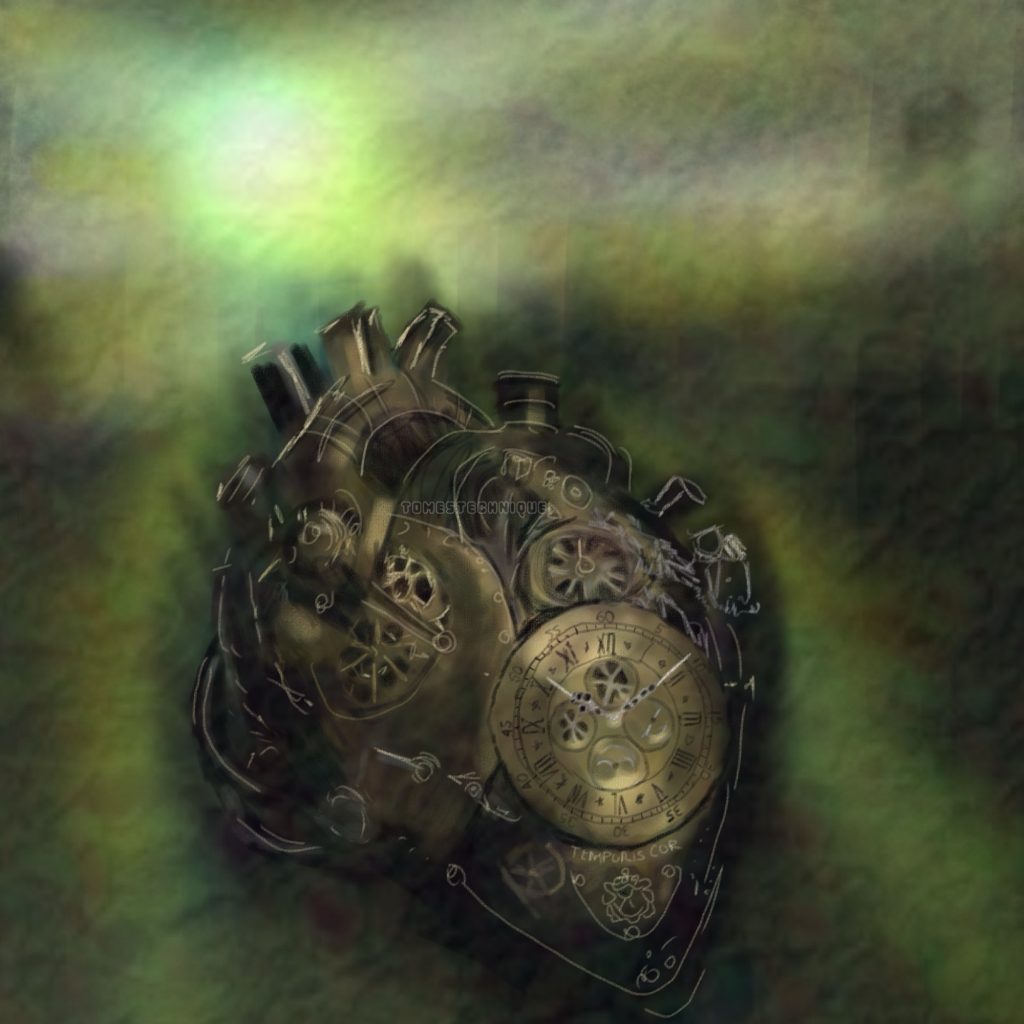
    The clockwork heart, wound thin with grace, it sings into the air,
    A sorrowed song, it will impart, a hymn beyond repair.
    It measures moments, lost and gone, the silence left undone,
    A love’s cold echo carries on beneath a dying sun.

    There’s a French painter that has caught my fancy. There’s a subtle soulfulness to the still life, a tenderness hidden beneath restraint. It reminds me that technique isn’t about being technical. Good technique is rarely sterile. The best painters leave fingerprints on silence. They understand that absence can carry as much weight as detail, and that softness, when intentional, can become its own form of precision.

    Landscapes were my first love and dare I say, will be my last. If I can spend my life falling in love a little each day, let it be with art, animals, nature, and conversations that linger long after they end. Let it be with moss climbing old stone, rain against open windows, dogs asleep in sunbeams, half-finished sketches abandoned beside a cup gone cold. There are worse ways to move through the world than paying close attention to beautiful things.